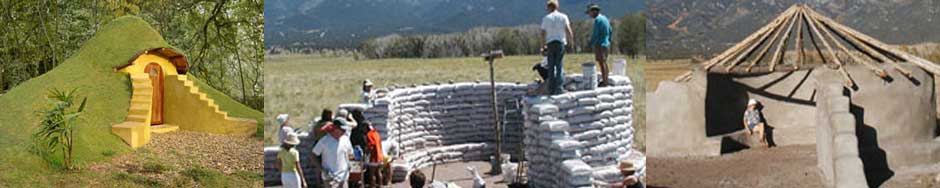

Once dismissed as purely vernacular, rammed earth is now considered a high-performance building material, capable of meeting contemporary structural demands while addressing urgent imperatives of climate resilience, sustainability, and human well-being. This transition is driven by advancements in geotechnical engineering and refinements in stabilization.
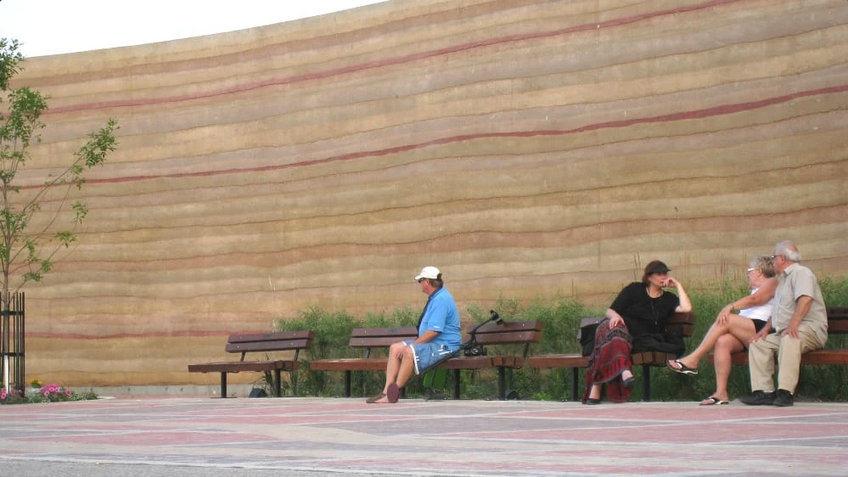 At its essence, rammed earth is the compaction of a calibrated mixture of clay, soil, sand, and gravel within rigid formwork. Its structural integrity emerges from density achieved through mechanical compaction that reduces porosity and enhances particle interlock. A typical mix includes 15–30% gravel, 35–50% sand, and the remaining portion made up of silt and clay. Clay works as the natural binder that holds everything together, while sand and gravel create the main structure and provide strength under compression. This carefully balanced mix turns raw earth into a solid, unified system where strength comes directly from the material itself.
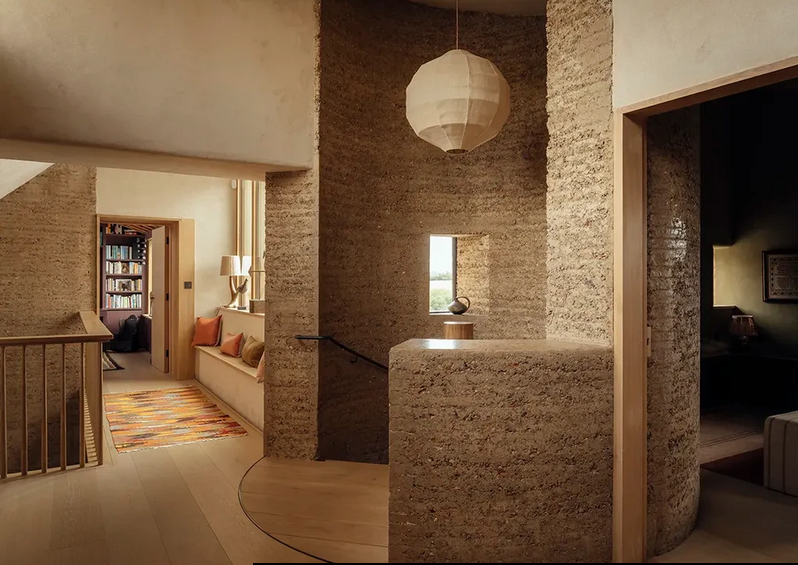 In seismic regions such as New Zealand, Nepal, and California, rammed-earth design must address lateral forces that can induce brittle failure. Contemporary strategies integrate vertical and horizontal reinforcement, typically steel rebar or synthetic geogrids, combined with continuous concrete footings and bond beams to distribute loads effectively.
The material offers inherent fire resistance and Its density ensures high acoustic insulation, creating interiors that are notably calm and protected from external noise.
 One of the most interesting attributes of rammed earth is its thermal mass performance. Earthen walls absorb heat during the day and release it gradually as temperatures drop, creating a thermal flywheel effect that stabilizes indoor environments. In climates with significant diurnal variation, this can delay peak indoor temperatures by up to 12 hours, substantially reducing reliance on mechanical heating and cooling.
Equally important is its ability to control humidity. The porous clay naturally absorbs extra moisture and releases it when the air becomes dry, helping keep indoor humidity in a comfortable 40–60% range. This passive balance supports better breathing conditions and helps prevent mold growth.
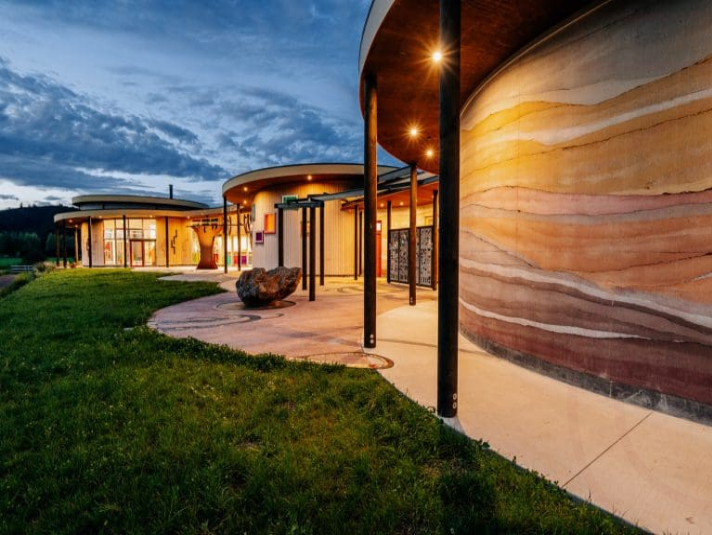 Structural Insulated Rammed Earth (sirewall.com) represents a significant advancement. By integrating a concealed insulation layer, often polyisocyanurate or expanded polystyrene, within the wall assembly, it achieves R-values exceeding R-30 while retaining interior thermal mass. This hybrid system meets stringent energy codes in colder climates such as Canada and the Pacific Northwest.
Hydrophobic admixtures further enhance durability by providing integral moisture resistance, mitigating erosion associated with traditional unstabilized earth. The result is a system capable of constructing load-bearing walls up to 100 feet tall, effectively redefining rammed earth as engineered sandstone.
 The Ricola Herb Center is Europe’s largest rammed-earth structure. Its 111-meter-long form feels like a continuation of the landscape rather than an industrial structure. Made using locally sourced soil from within a 10 km radius, its prefabricated panels reduce transport emissions and firmly connect the building to its natural ground and geology.
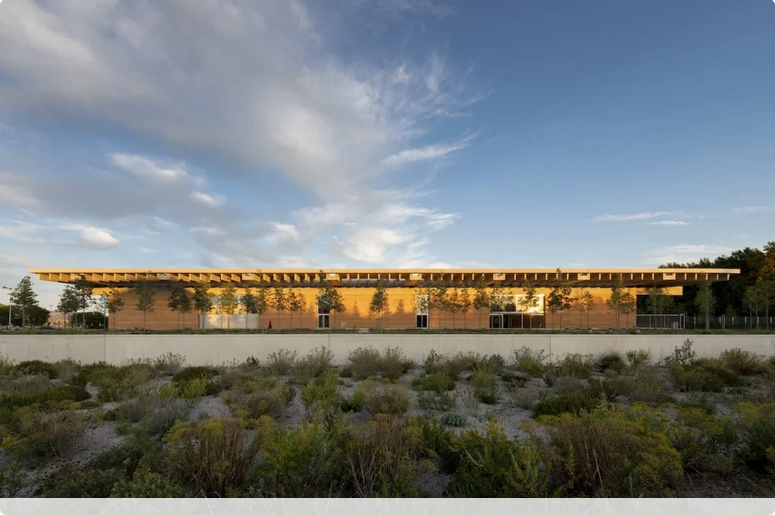 The Narbo Via Museum has 800 mm thick composite walls, combining structural layers and insulation, supporting large-span roof structures while meeting seismic requirements. With compressive strengths reaching 30 MPa, the material operates as a structure and finish. The stratified layers, enriched with oxide pigments, reflect the geological and cultural context of southern France. Here, rammed earth becomes a structural system and a narrative surface.
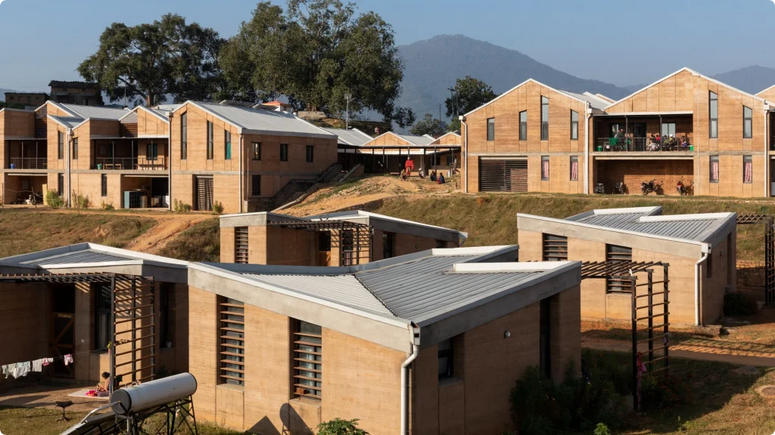 In one of Nepal’s most remote regions, Bayalpata Hospital shows the humanitarian value of rammed earth. Built using locally sourced soil with a small amount of cement for stability and reinforced to withstand earthquakes, the project lowers cost and construction challenges. The warm, tactile feel of earth creates a calm, non-institutional atmosphere that reflects local building traditions. Passive design strategies like thermal mass, natural ventilation, and daylight keep the building comfortable, even in a region with limited infrastructure.
At Marfa Ranch the thick earthen walls protect against extreme desert conditions, helping keep indoor temperatures stable while grounding the building within its vast landscape. Organized around a central courtyard, the project contrast between heavy earthen walls and light steel breezeways, creating a balance of solidity and openness.
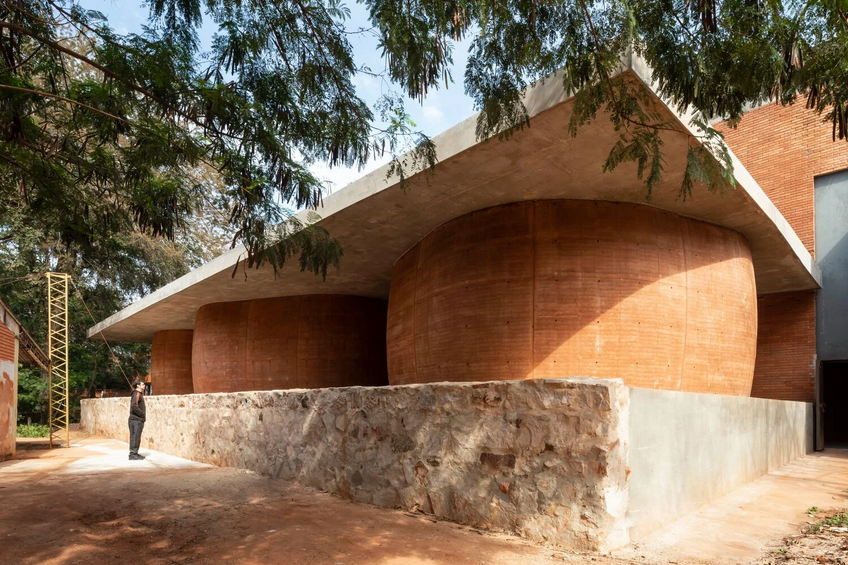 The resurgence of rammed earth is not a trend but a step towards sustainability. It points toward an architecture that is grounded, performative, and honest in its use of materials. Buildings no longer impose themselves on the landscape; they emerge from it.
You can read the original article at parametric-architecture.com