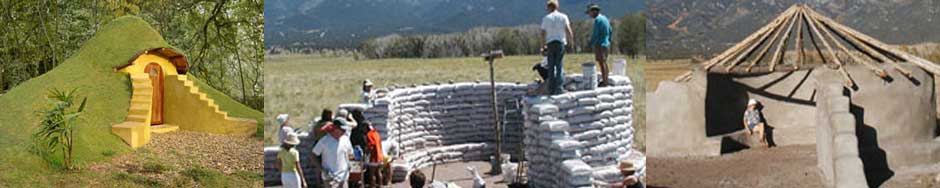
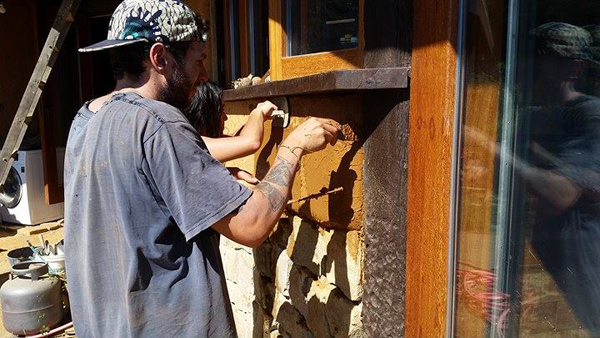
“It can take about two weeks to get your tests ready for this particular mix so make sure to leave enough time. You are going to need to do a number of tests before you find your ideal render, as the materials and the way they react to the environment are going to be different everywhere in the world. Even if you are living in a similar climate to us here, I would not recommend copying our mix as the clay, sand and poo you will be using will not likely be the same.”
Weaving Studio Plan
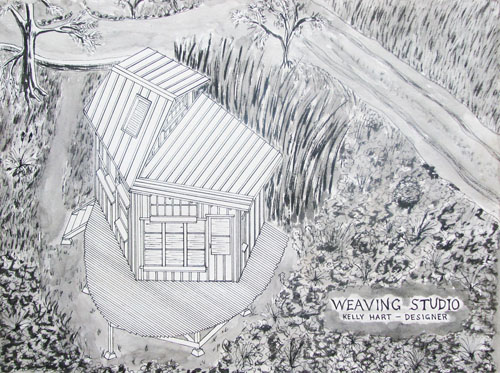
In the early 1970’s I was commissioned to design and build a small weaving studio on property located along the coast in Bolinas, California. The client was a weaving apprentice with my sister, who was living on rented property with her family. There was room on that property to place a small studio separated from the main house, and that is where she wanted me to build the studio. Obviously it would be foolish to place a permanent structure on rented property, so I suggested that I design it in such a way that it could fairly easily be dismantled and moved elsewhere if necessary. She liked the idea, so that is what I did.
First Earthbag Toilet Prototype Completed in India
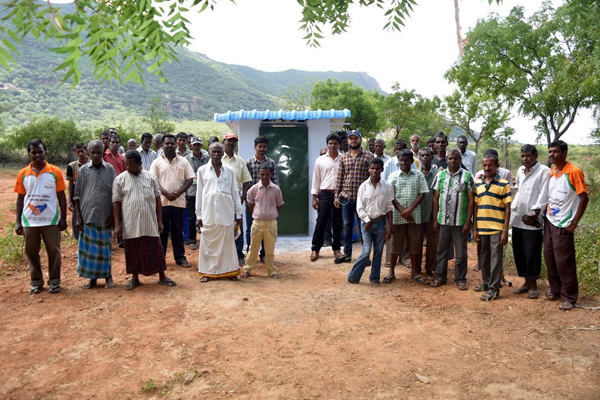
Great news from Kateryna Zemskova of Good Earth Nepal.org: “We are proud to announce the completion of our first hyperadobe toilet in Madurai, India. [For new readers: hyperadobe uses raschel mesh earthbags. See this hyperadobe step-by-step article with photos and building directions. Also, you can search our blog for further details.]
5 Reasons We Love Earthbags
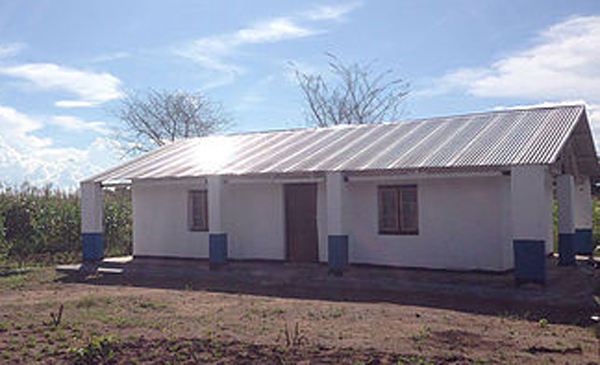
“Back in 2012, our co-founder Jamie sought to build a school in Malawi using conventional western building techniques. After lots of research, he soon discovered that this would prove too costly. It was then that he came across the earthbag building system.
Building an Earthbag and Stone Rainwater Storage Cellar
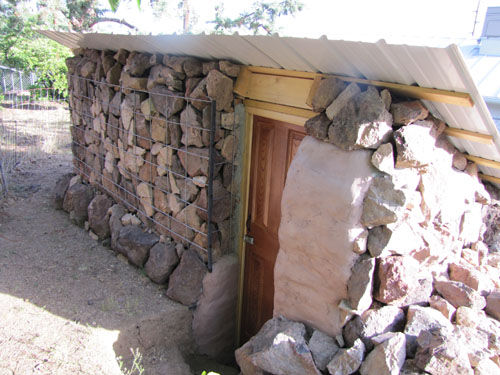
I decided to build a simple recessed cellar in my yard that would serve a variety of functions, including rainwater storage, root cellar and space for vermiculture (worm bins). All of these require relatively cool but not freezing conditions, so digging into the ground was a good way to accomplish this. It seemed like the easiest approach would be to build this primarily with earthbags.
First I calculated how large it needed to be in order to hold the two large (275 gallon) water tanks I intended to buy, as well as provide enough space for produce and worms. It was a tricky business to fit all of this in the space available, especially because I had to work between existing underground irrigation pipes.
Earthbag Eco Home in Morocco
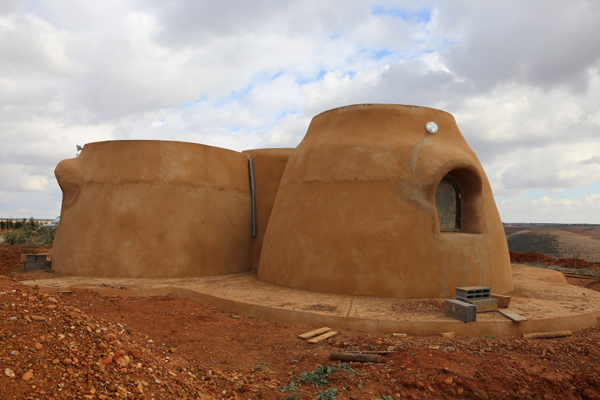
“Eco-dome Morocco is an ambition that draws both in the basic design of the American-Iranian architect Nader Khalili and the rich Moroccan heritage in earth-based construction. This perfect combination is our main source of inspiration to give our buildings a new architectural and structural sense: buildings that respect the environment, adapt to the environment but mostly emanate from the environment; And because it is believed that human comfort lies in its return to nature, Eco-dôme Maroc is there to ensure this first step.”