How to build an earth bag house in rural Nepal at Her Farm
Posted by Scott MacLennan on Tuesday, 14 May 2013
“This is how we built an earthbag house in a village in Nepal. It’s cheap and easy to do.
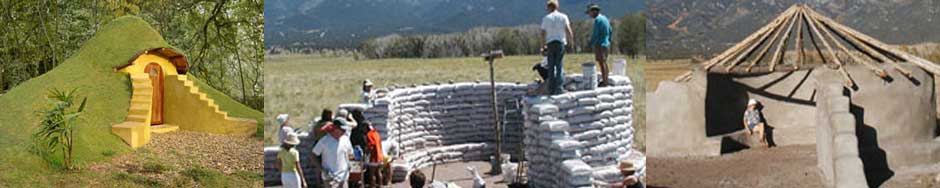
How to build an earth bag house in rural Nepal at Her Farm
Posted by Scott MacLennan on Tuesday, 14 May 2013
“This is how we built an earthbag house in a village in Nepal. It’s cheap and easy to do.
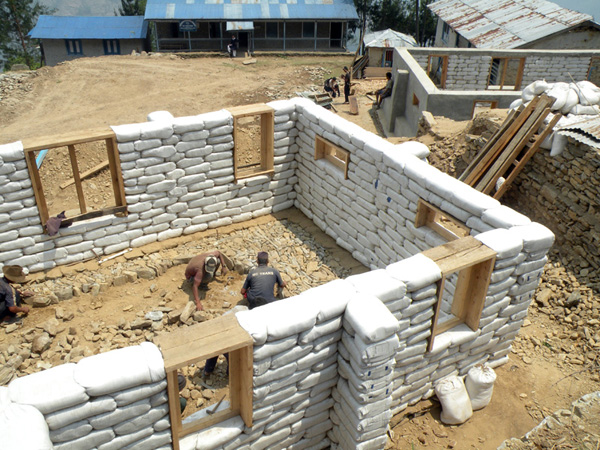
“Edge of Seven’s most recent project, the Basa Higher Secondary School, is complete! The school is the second earthbag project in the Solukhumbu region and was constructed in collaboration with The Small World, Edge of Seven’s in-country project partner. The two new buildings will serve students from classes 11 and 12 and enable more students (and girls in particular) in rural Nepal to achieve a higher secondary education.
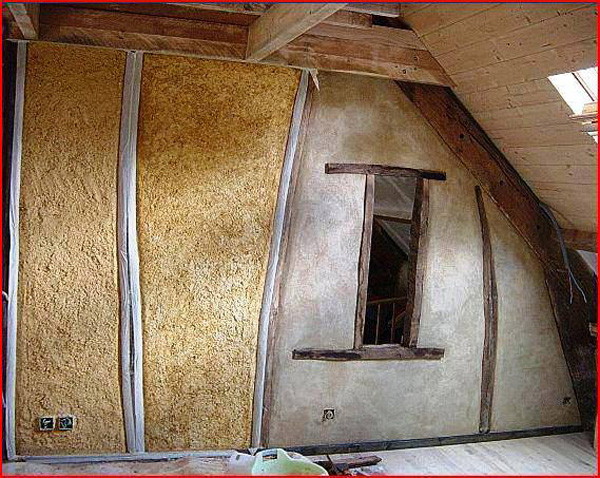
How did I miss this site of one of my favorite magazines??? Maybe because I’m not a big Facebook fan? Lots of good stuff here. There’s a close-up photo of a bamboo splitter, rammed earth fireplace and lots of other interesting natural building projects. The photo above shows a good example of a lightweight building system that does not require intense physical effort.
You can turn an ordinary post and beam structure into a superinsulated tiny home for very low cost, and minimal time and effort. This project shows how easy it is to wrap a post and beam tiny home with rice hull bags in non-code areas. Bags of rice hulls turn what would ordinarily have been a poorly insulated home into a superinsulated home that’s quiet and comfortable.
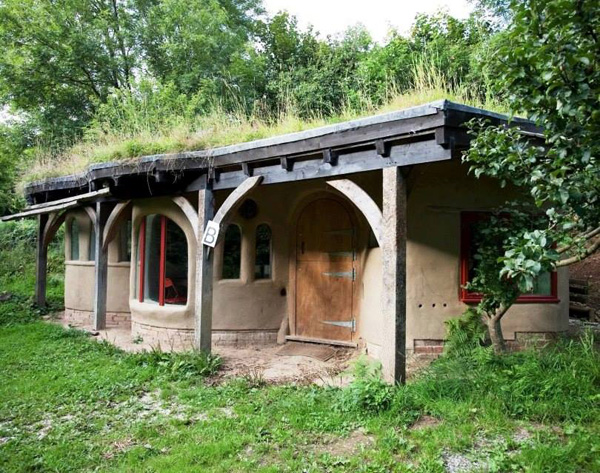
“How to choose your exterior plaster?
1) make it breathable — this refers to the ability of a material to allow humidity back-and-forth through the surface (it does not mean there is literally air flow through the material).
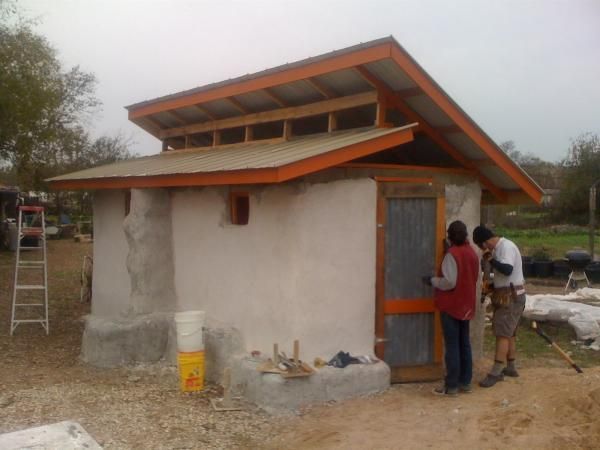
“Earthbag Construction is a natural building technique, by which extremely durable and strong structures are built with little cost to the planet or to the pocket book. It is a quick and easy process that makes use of local materials with minimal energy consumption, and it is suitable for use in a wide range of climates.