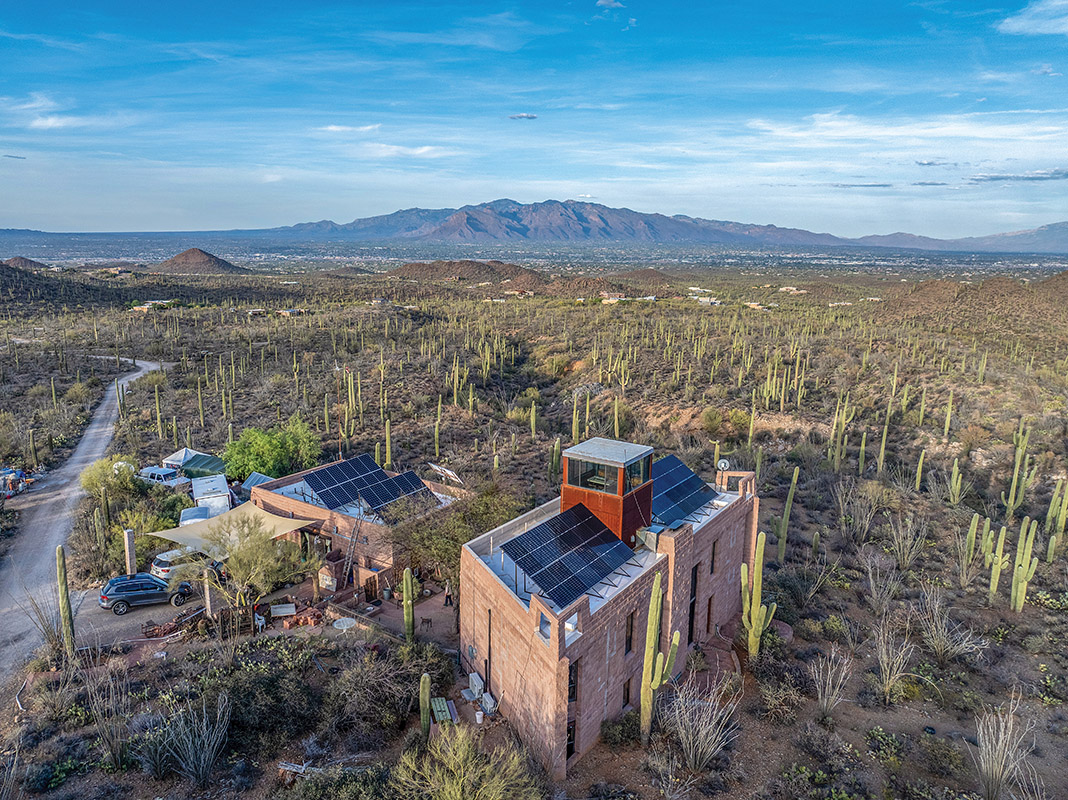
Gale Marsland fell in love with Arizona’s desert climate and eventually built an off-grid home with her husband using sustainable design, passive solar principles, and traditional Southwestern building techniques. Living without utility power, they relied on photovoltaic solar panels, batteries, propane, and innovative cooling systems, gradually upgrading their technology as renewable energy became more efficient and affordable. In this article, Gale explains what she and her husband have learned over 30 years of living in the house.
In 1988, after we’d been married for eight years, Richard and I moved to the Tucson Mountains surrounded by Saguaro National Park to live in an off-grid home that we had built. The land we bought to build on started out as an 1890 mining claim, and the nearest neighbor and utility power were almost two miles away. Richard and I met because of our similar commitment to sustainable living and environmental awareness, and we had been designing and building passive solar homes for years, so we viewed building our forever home as an opportunity to use photovoltaics and live completely off the grid in a house we would design and build ourselves.
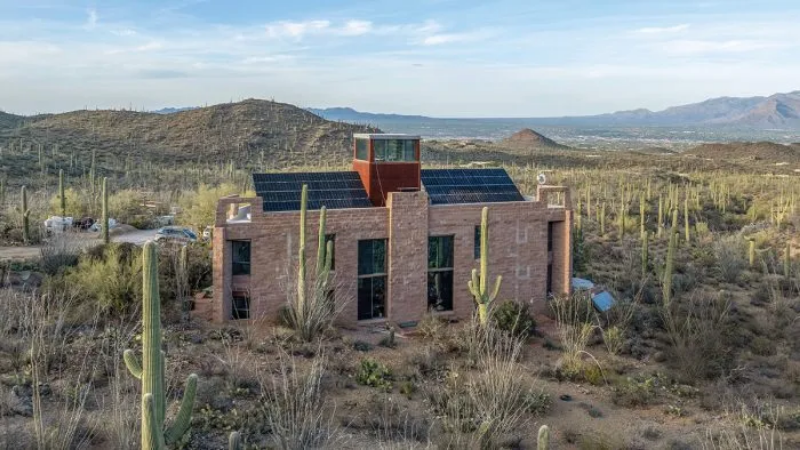 Richard’s father was an adobe mason, and he taught Richard to be a mason too. The house we designed uses building techniques developed by generations of native and Spanish colonial home builders. The traditional architecture of hot, dry places like Arizona incorporates thermal mass and shading to keep interiors cool. The sun slowly warms the thick masonry walls during the day, and then the house releases this heat to the interior during the cool desert nights. A lot of attention is paid to the placement of doors and windows and to providing shade through porches and overhangs to keep the heat from the sun out of the home’s interior.
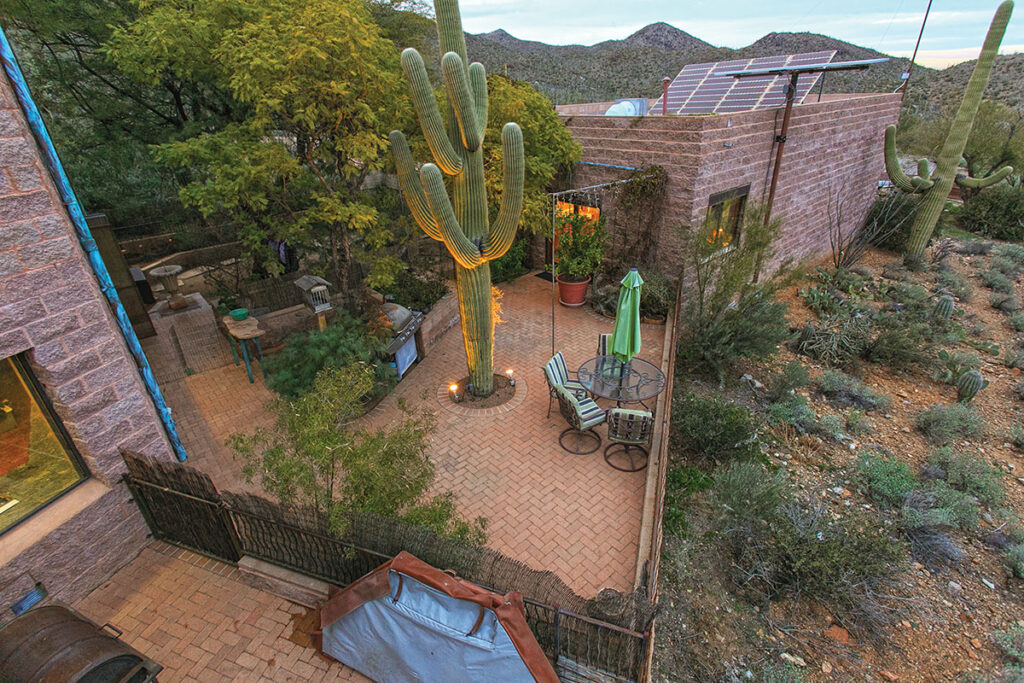 We avoided west-facing windows because of their afternoon solar gain. We also created a walled courtyard surrounded by shade trees as shelter from the sun and prevailing winds for outdoor living. Its mature landscaping also helps to shade the house.
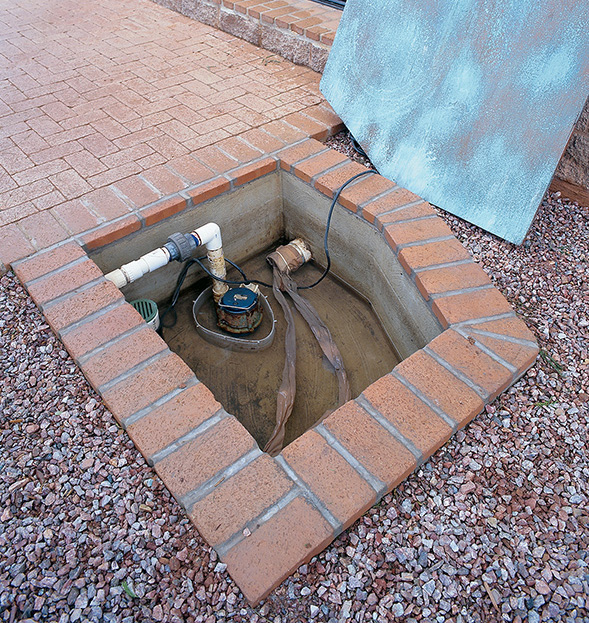 For every inch of rain, we harvest about 1200 gal. of water. If we get our average rainfall, we harvest 12,000 gal. to 14,000 gal. a year. To conserve water, we plumbed the showers, washing machine, dishwasher, bathtubs, and bathroom sinks into a graywater system with a pump and small holding tank.
The original cool tower consumed very little electricity—about 40W of power—but it used several hundred gallons of water a day. It was also leaky, and it stained some of the wood ceilings. After about 10 years, we replaced it with a super-efficient evaporative cooler that consumed about 100W of power, but it still used 100 gal. of water a day. Adding minisplits curbed this water use, and we converted the cool tower to an observation tower that offers amazing views.
One of our best decisions was adding recirculating loops to all the hot-water fixtures. When activated by a switch at the bathrooms or kitchen sink, a pump circulates cooled-off water in the hot-water lines back to the water heater instead of sending it down the drain.
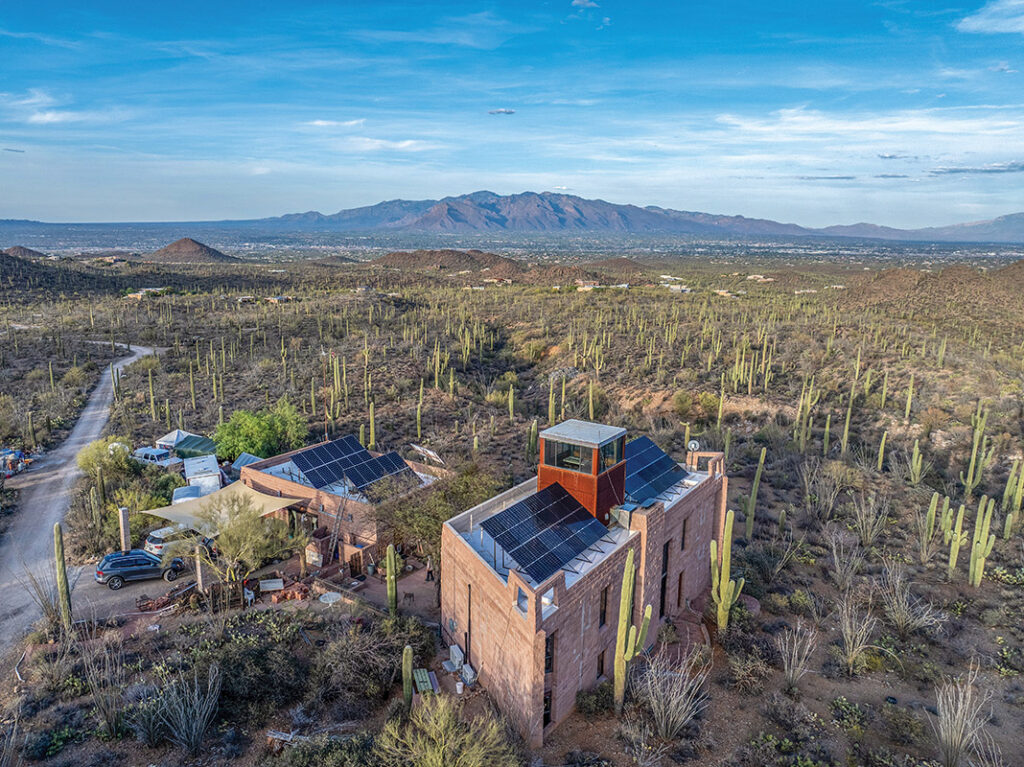
Our building lot was miles down an unpaved road, with the nearest utility pole two miles away. The electric utility declined to bring in power for free and we didn’t want to spoil the view with overhead wires, so running underground electrical lines for the entire two miles would have been our financial responsibility and cost tens of thousands of dollars. With our interests in ecology and self-sufficiency, as well as our backgrounds in resource-efficient construction, Richard and I thought we could lead a comfortable life without utility power. This was a good thing, because with the price of photovoltaic (PV) panels at the time, we would have to use electricity sparingly. We went from incandescent, to fluorescent, to LED light bulbs, with every change more efficient than the last.
Anything electrical—including receptacles, lights, the dishwasher, the washing machine, and the pump for our cooling system—was powered by our 5kW PV system and 4kW inverter that converted the PV system’s DC current to AC. Excess electricity generated during the day was stored in 32kWh lead-acid batteries for use at night and during cloudy days. Later on we installed a 7kW array and a larger inverter. With more power, we switchrd to a Sunfrost DC refrigerator. The company still makes energy-efficient AC and DC refrigerators favored by folks producing their own power from wind or PV.
Our original batteries lasted 28 years, and the 5kW and 7kW PV systems almost always kept up with our electrical demands, given the low-electricity diet of our household. The one exception was our teen son’s gaming computer. It could consume hundreds of watts during late-night gaming sessions. Once or twice he nearly depleted the batteries by morning.
 A few years ago we installed our current PV system, which has a 13.5kW PV array connected to a 12kW inverter with a 50kWh battery system for storage. This third system makes living off the grid a piece of cake compared to when we started. Plus, expertise in electronics is no longer required to wire and to troubleshoot problems. Modern inverters have self-diagnostics and are well-labeled for troubleshooting. They also produce clean power with a true sine wave for near utility-grade power.
Modern lithium batteries are a game-changer too. They take up less room, don’t require any maintenance, and don’t need to be ventilated to prevent a buildup of hydrogen gas. They can also be drained to 20% of their capacity for more available power.
Most importantly, our third PV and battery system had enough capacity that we could switch to energy-efficient minisplits for heating and cooling instead of relying on the wood fireplace and propane heater for heating and evaporative cooling for air-conditioning. Eliminating the evaporative coolers would be a huge help in living with our biggest challenge: a scarcity of water. Now that we cool our house with minisplits, we use about 300 gal. to 400 gal. of water a week and have reduced our water hauling to once every three weeks.
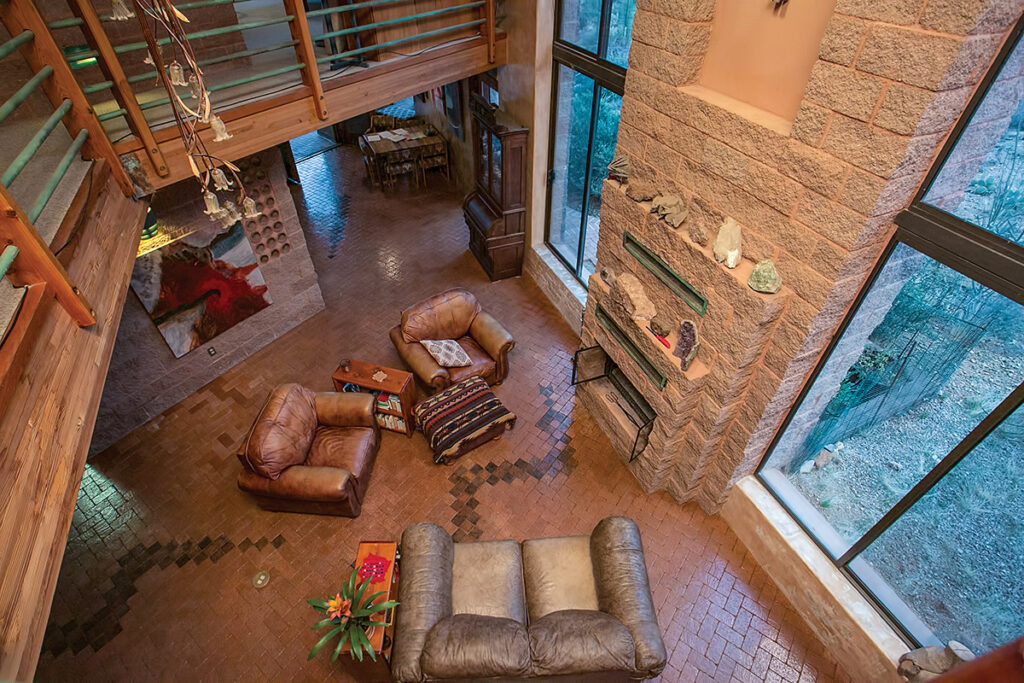 The south-facing windows are optimally placed to maximize solar gain from low-angle winter sun. Passive ventilation helps with both heating and cooling. An open floor plan and high and low operable windows allow us to take advantage of breezes and maximize air movement. Ceiling fans in every room enhance circulation and increase comfort.
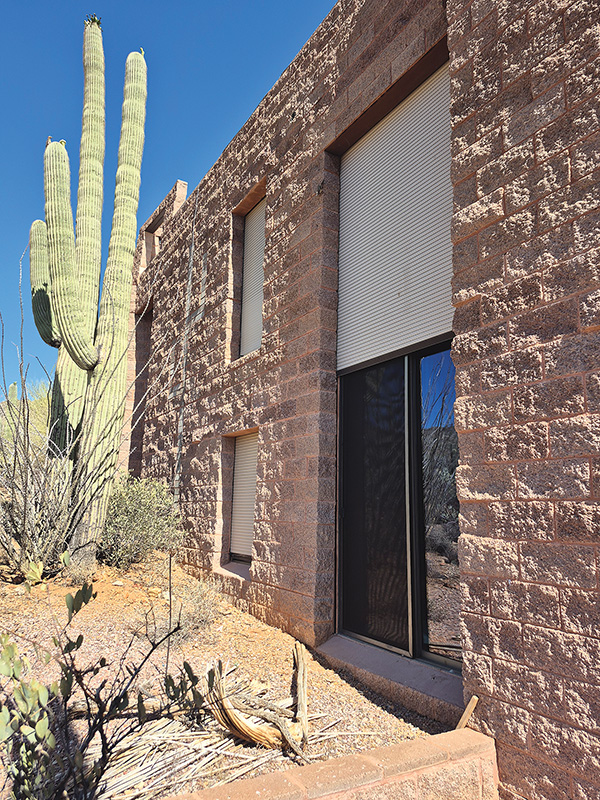
All the windows have electronically controlled roll-up steel shutters to provide control of the sunlight, maximizing heat gain in winter and minimizing it in summer. A bonus is that they can be closed when we are away, making it nearly impossible to break into windows and doors.
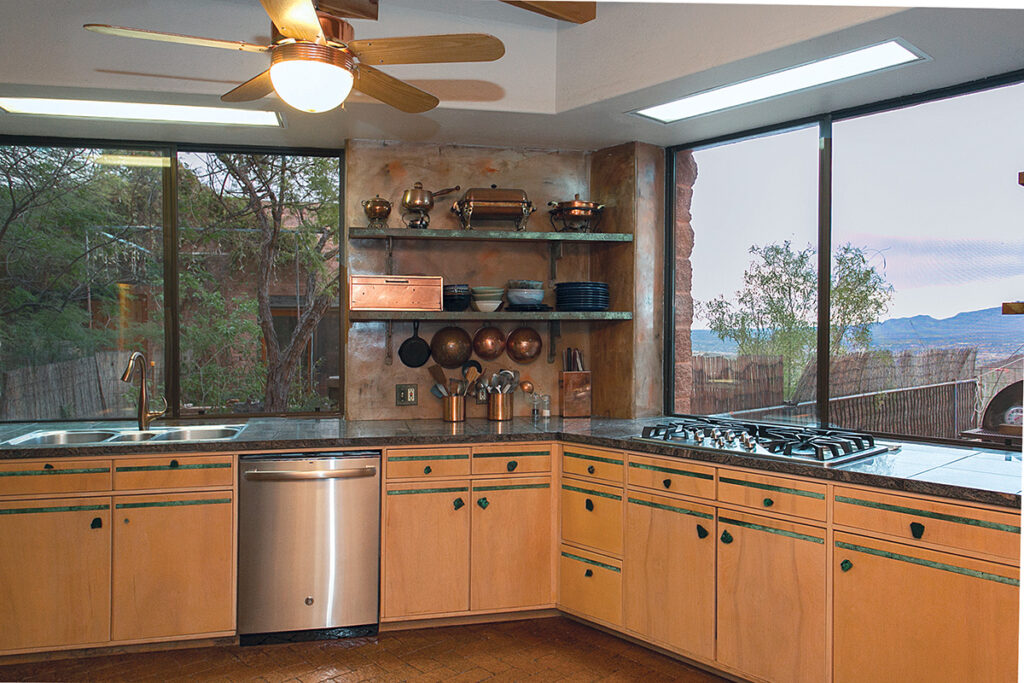 High-mass masonry walls and floors minimize temperature fluctuations, helping to keep the house cool in summer and warm in winter. Shade from trees in the courtyard also reduces heat gain, keeping the house cooler during warm days. The west wall, which is partially underground and sheltered from the sun, lowers indoor temperatures as well. A layer of continuous foam insulation under the roof membrane and R-30 fiberglass batts in the rafter cavities add up to R-42 in the roof.
Our ductless minisplits are efficient and quiet, and they can easily be turned off in areas of the house that aren’t being used. Our system consists of three outdoor units with individual indoor heads with remote controls and timers, which makes it easy to cool spaces before they’re occupied and to automatically shut them off at night.
In 1988, we paid $25 per watt for solar panels. That cost has gone down—the ones we added recently were $0.40 per watt. The newest PV panels are also bifacial, which means they generate energy from light that strikes both the front and the back. Modern inverters are more efficient at converting DC to AC, and the output is “cleaner,” so our lights no longer flicker when we use the microwave. Our latest PV system provides more power than we can use during the day, and our battery bank stores the excess for nighttime.
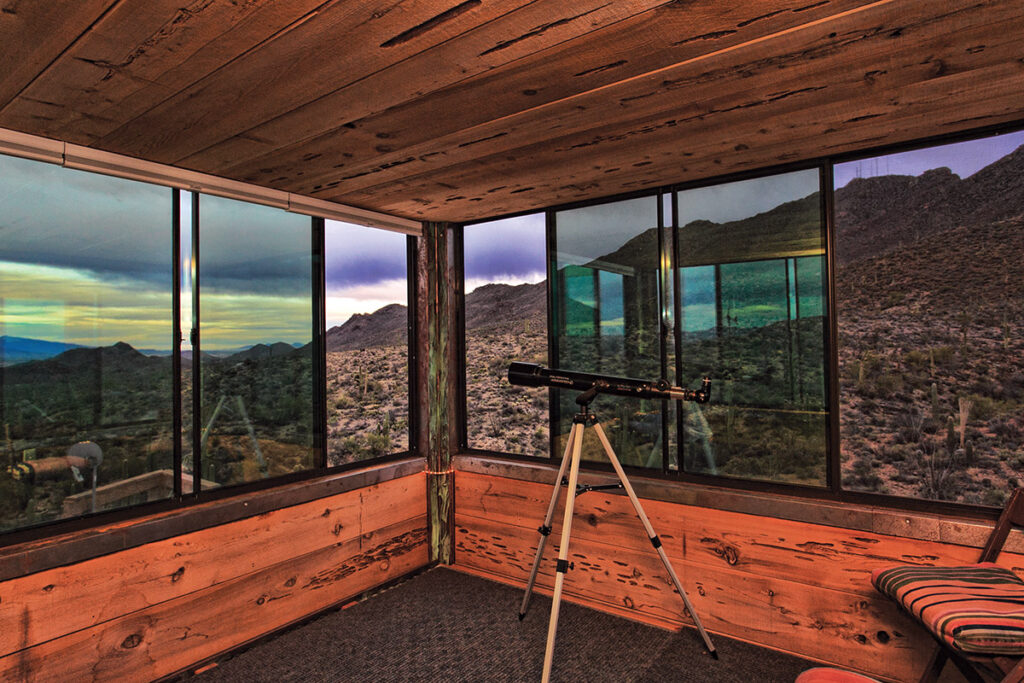 We both agree that off-grid living is easier than when we moved here decades ago. The advances and cost reductions in PV and batteries, modern LED lighting, and high-efficiency heating and cooling equipment like minisplits have all made living off-grid easier. The unspoiled desert setting, the house’s low-maintenance construction, and the amazing light and views have spoiled me to the degree that I’m not sure I could live anywhere else.
You can read ghe original article at www.finehomebuilding.com