Most bamboo species reach full height in three to five years compared to at least a decade for traditional timber, making it incredibly renewable. The fastest-growing bamboo species can grow up to 35 inches, or 91 centimeters, in a day! During its rapid growth phase, bamboo absorbs a lot of carbon dioxide and releases lots of oxygen into the atmosphere. This natural carbon sequestration process means bamboo structures can have a negative carbon footprint throughout their life cycle—a claim few building materials can make.
The journey from seedling to construction material involves careful timing and treatment. Harvesting typically occurs during the dry season when its sugar content is lowest, reducing the risk of insect damage. Traditional preservation methods involve soaking bamboo culms in water or treating them to enhance durability and pest resistance.
Engineered products like laminated bamboo lumber and bamboo composites combine traditional knowledge with contemporary manufacturing techniques. These innovations address one of bamboo’s historical limitations: standardization.
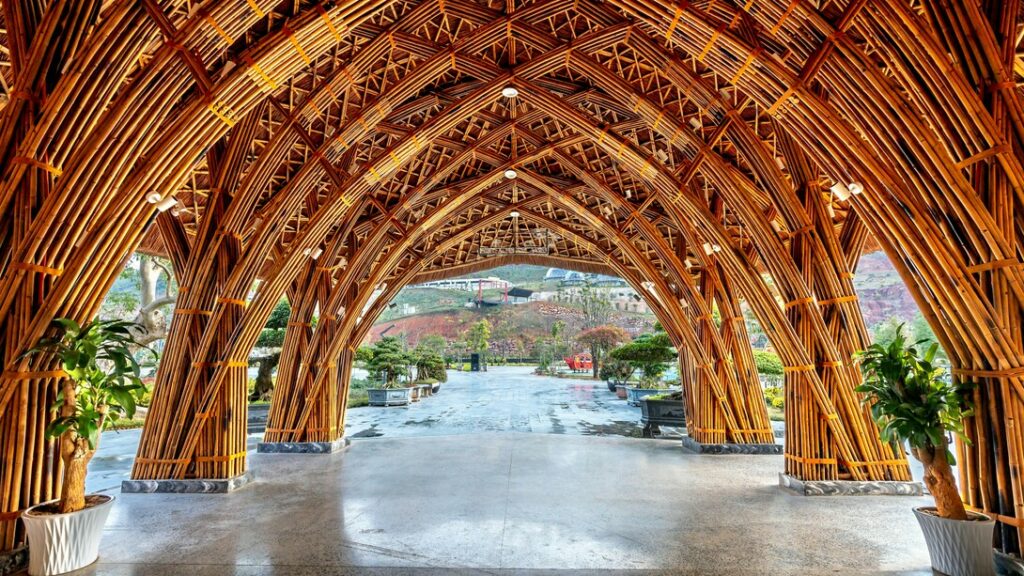 Bamboo’s tensile strength rivals that of steel while being much lighter, making it ideal for structures that need to flex rather than break under stress. This flexibility proves especially valuable in earthquake-prone regions, where bamboo buildings can sway safely while rigid concrete structures might crack.
Today’s bamboo architecture goes far beyond traditional huts and scaffolds. Contemporary projects are pushing the boundaries of what’s possible with this versatile material, creating structures that rival conventional ones in both form and function.
Bangladesh architect Marina Tabassum conceived modular designs constructed entirely of bamboo that demonstrate how this material can address sustainability and social responsibility. Her work proves that bamboo architecture can be beneficial and practical and create affordable housing solutions while respecting local building traditions.
 The Luum Temple in Mexico is a testament to bamboo’s structural capabilities. It is designed to withstand hurricane winds and significant seismic forces and features five intersecting hyperbolic paraboloids made entirely of bamboo arches and beams. Since its completion, the structure has successfully weathered several intense hurricanes, proving bamboo can perform under extreme conditions.
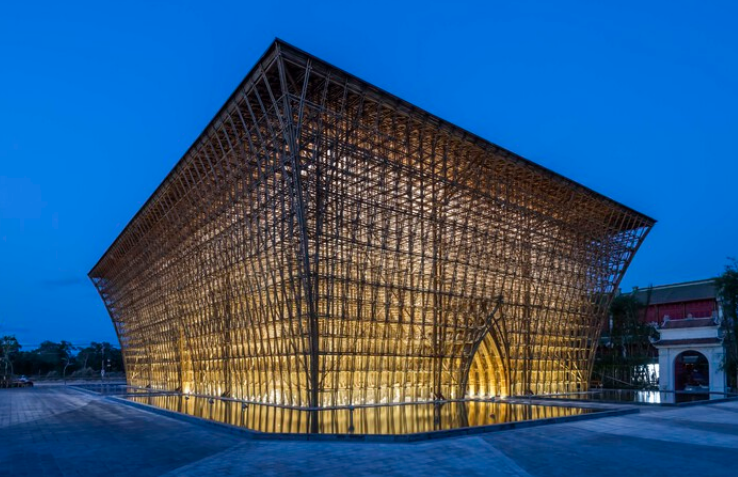
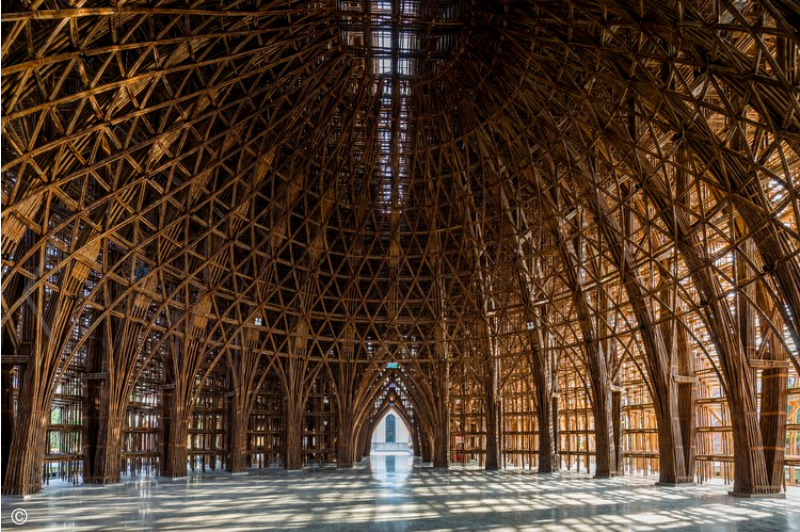 Vietnam’s Phu Quoc Island Visitor Center employs negative space design principles, using bamboo’s natural flexibility to create flowing architectural forms that defy gravity. The building demonstrates how modern engineering can harness the material’s unique properties to achieve structural integrity and aesthetic appeal.
Despite bamboo’s impressive properties, scaling its use globally may come with some hurdles. Building codes in many developed countries have yet to catch up with bamboo’s potential, creating regulatory barriers. Standardization remains another challenge. Bamboo’s natural variation means each culm is slightly different, requiring adaptive construction techniques rather than a one-size-fits-all approach.
Bamboo is still associated with temporary or low-income construction, despite mounting evidence of its durability and sophistication.
The opportunities for modern bamboo construction far outweigh the challenges. Building with bamboo can significantly reduce construction costs while providing comparable durability, especially in regions where bamboo grows naturally.
Processing bamboo as a building material can happen at the community level, keeping economic benefits local while reducing transportation emissions.
 Bamboo challenges architects to work with nature rather than against it, embrace flexibility over rigidity, and consider the full life cycle impact of designs.
For architects, engineers, and developers ready to be part of this green revolution, bamboo offers a path toward truly sustainable construction. It’s time to think beyond steel and start building with the grass that could help save the planet.
You can read the original article at www.meer.com