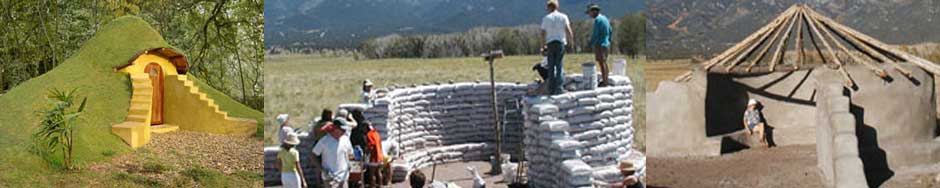
Jenny Pickerill is a professor of environmental geography at the University of Sheffield, and I met her when she was conducting research for this book, gallivanting around the world on a Winston Churchill Memorial Trust Travel Fellowship. She interviewed me and we toured a variety of novel eco-homes near Crestone, Colorado, where I was living at the time. In addition to Crestone, she visited ecological enclaves in Britain, Spain, Thailand, Argentina and other locations in the United States.
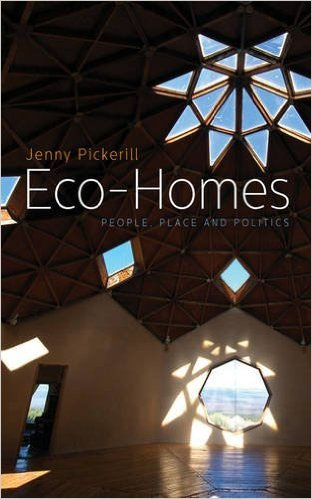
Her purpose in assembling this academic study into ecological living was to focus more on the social, geographical and political issues around eco-housing, which are often ignored, in the hopes that a broader acceptance of sustainable architecture will evolve. I found her analysis enlightening and well worth the read, if a bit academic in its outlook. Each chapter of the book is devoted to a different filter, which in total provides a good understanding of the issues involved.
The first chapter focuses on the eco aspects of eco-homes, and why this is important. She observes that “eco-houses are being built to deal with the issues of waste through structural innovations by altering size, harnessing renewable technologies, retrofitting existing housing stock and changing occupants’ behavior and practices. Each approach has benefits, limitations and financial costs.” She goes on to chastise government and industry for emphasizing the technical fixes while ignoring simpler solutions.
Next, Jenny delves into the home aspect explaining how hard it is to define what home really is. Home can generally refer to country, state, city, bioregion, neighborhood, as well as a specific house. We have an emotional attachment to our homes that must be recognized in order to make eco-houses appealing to a wider audience. The emotional component is affected by aesthetics, location, style, privacy, comfort, and worth.