Tiny House Tech Program Proposal

All the great videos being presented at the Tiny House Summit have really fired my imagination. One of these videos by Saul Rip Hansen was about tiny house high school shop classes. I think this is a great idea. Shop classes in high school played a key role in my career as a woodworker and contractor, and I can see where the right program would be very beneficial.

Read more

The 2017 Tiny House Summit

I have been invited to participate in the 2017 Tiny House Summit as one of their Keynote speakers. This event will be online for five days and is completely free to the public. It will happen from February 20th through February 24th. There will be many presentations about tiny houses and the world of tiny living.

If you click on the image on the right you can sign up to participate.

Read more

Rebuilding Nepal, One Earthbag at a Time

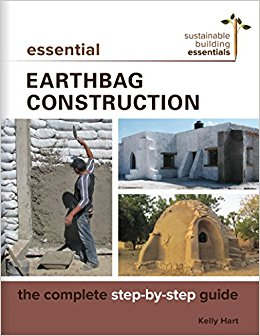
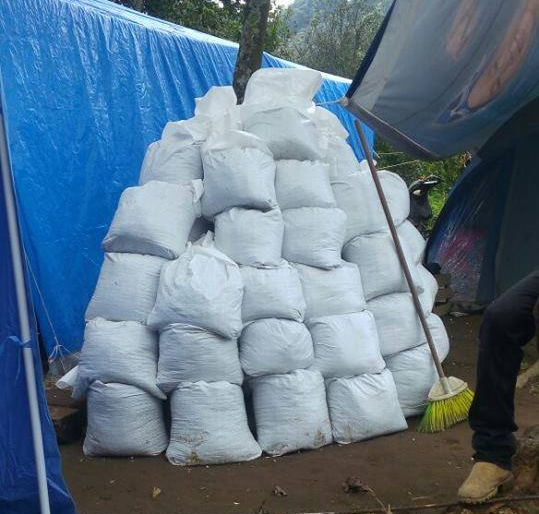
rebuildingnepalRebuilding Nepal, One Earthbag at a Time is a short Kindle book assembled by a team of eight volunteers who went to Palchok in the Trishuli Valley to rebuild a school in the fall of 2015. Because of the remote location they needed to plan for every aspect of the project, and this book is primarily advice for others who might try to do something similar. Besides actually building the school, they wanted to introduce the earthbag technique to the villagers so they could continue rebuilding this way. The team had raised enough funds from friends and family to accomplish this goal. They were there for only two weeks, but they got that small school built! Graeme Howell was the mastermind behind this endeavor.

The first chapter introduces what they consider to be the essential building process and suggests how to make this happen efficiently. Because of the number of volunteers, including folks from the village, they wanted to keep everybody busy and make sure there weren’t bottlenecks in the process. For this reason they had people filling and sewing bags right away, even before the foundation trench was prepared. Likewise, they had people screening soil for the eventual plaster.

Read more

Hempcrete

I’ve been aware of the value of what is called “hempcrete,” a mixture of lime and hemp hurds (an agricultural byproduct), for several years. But I’ve never learned much about how to prepare it, partly because industrial hemp cultivation has been illegal in the United States for the last eight decades, since it is related … Read more

Does Insulating Paint Really Work?

For many years I have wondered about the effectiveness of various products that advertise that they can insulate roofs and walls by simply painting them! The technology is said to stem from the science (developed by NASA) of protecting space vehicles by coating them with tiny ceramic spheres that reflect heat, so that they don’t burn up when re-entering the atmosphere. Some products consist of an additive for paint, while others are specially formulated paint.

When I realized that I wanted to insulate the 1940’s adobe house I had bought, I began to wonder whether this might be a simple solution to accomplish this. In researching this possibility I discovered that there were conflicting opinions about whether such a paint could work. The manufacturers claimed that many tests have proven their effectiveness and there were some testimonials from individuals or businesses that made similar claims. But I couldn’t find any independent studies that I considered actual validation of the concept.

Not being willing to proceed blindly with painting my entire house with expensive paint on the assumption that it would improve the thermal dynamics of my completely thermal mass walls, I decided to conduct an experiment that would accurately inform me exactly how effective the paint might be. I conceived of a situation that would simulate the thermal mass walls that were left open to the ambient atmosphere over several days. There would be one setup painted as prescribed with the insulating paint and then a second control setup that was identical, except without the insulating additive. Embedded within each of these would be a wireless thermometer probe to keep track of the separate interior temperatures.

painting

I found some perfectly uniform 16’X16″X3.5″ concrete blocks for sale at my local building supply store quite cheaply, so I bought ten of these. Next I acquired the insulating additive (Insuladd was the brand name) and used some exterior latex paint that I already had on hand. I thoroughly mixed the additive to some of the paint and kept some of it in its original form for the control. Then I painted half of the concrete blocks with the insulating paint and half with the control paint, applying two coats of each.

Read more