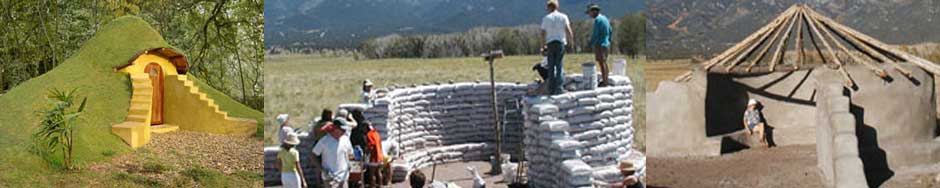
Online Learning with the Earth Building Academy

The Earth Building Academy is offering a new three month round of online courses starting February 20th. This includes: 30+ hours of pre-recorded lectures and hands-on demonstrations, which you can implement directly on your own projects; weekly 60-90 minute live group calls for Q&A’s and consultancy; 2 live hands-on workshops via zoom where you can … Read more

South African School Gets Makeover with Recycled Materials

The Natural Building Collective has shown what it really means to be innovative after revamping the Ulwazi Educare in Delft, Cape Town to accommodate 120 kids using tires, ecobricks, cob, reclaimed materials from the film industry, glass bottles and reclaimed doors and windows where possible. The Natural Building Collective uses buildings to connect, create, empower and … Read more

Algae as a Sustainable Fuel and Food Source

Algae is a sustainable material available to designers. It uses photosynthesis to absorb carbon dioxide and produce oxygen, thereby reducing environmental impact and purifying the air. It can be used as renewable biofuel or it can act as a highly nutrient-rich food source. Its rapid growth can make it a good alternative for fuel and … Read more

Regenerative Gardening in New Zealand

Brent Burge was diagnosed with Myalgic encephalomyelitis (ME) 22 years ago. ME is a neurological disease affecting multiple systems and causes chronic fatigue. Hence, it is also commonly known as chronic fatigue syndrome. Burge said it was good to get the diagnosis as it gave an explanation and understanding of what was happening. However, it … Read more

Extremely Efficient Home in Alaska

A 2 bedrooms, 1 bathroom house designed and built by Dr. Tom Marsik and Kristin Donaldson of University of Alaska in Dillingham, Alaska earned World Record Academy‘s “2021 Green House of the Year” honor, after setting the world record for being the World’s Tightest Residential Building. “The main purpose of this world record is to … Read more

The Three Rs of Architectural Conservation

Adaptive reuse fits the sustainability mantra of the “three Rs,” (reduce, reuse, recycle) but all too often we overlook the green side of architectural conservation. Whether it’s a Gothic Revival church, a modernist Centennial project, or a contemporary design in glass and steel, a completed structure has a huge carbon footprint. Demolishing an existing building, … Read more