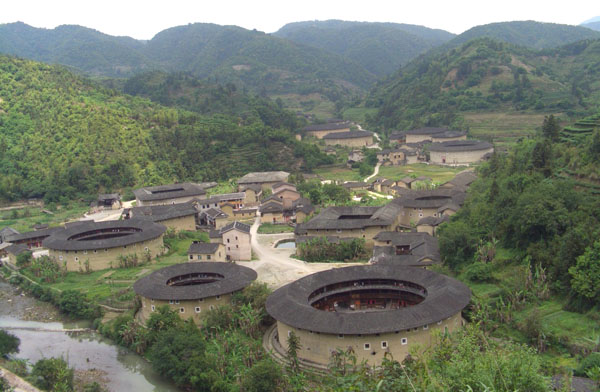
 I received an email from Professor Sunny Cai, who teaches architectural design at a college in Beijing , China. He mentioned his interest in ancient Chinese architecture, especially the earthen buildings called “tulou,” and he sent me some pictures of these rammed earth buildings. I had never seen anything quite like them, so I queried him further about how they were made and used. He replied, “The foundation was built with rocks, 2 feet high all around. The juice of glutinous rice and some lime is mixed into the earth for strength, and then sliced bamboo, reeds, and sometimes pieces of wood are also used.”
Building Styles
Recovering America
The late Malcolm Wells was a writer, artist and architect who was a vocal advocate of underground building since the early 70’s, having written nearly twenty books on the topic. He wrote in a humorous, personal, eloquent and inspiring style. His books are completely written by hand in pen and ink, and are liberally illustrated … Read more
A 3D Printed House for $4000?
There has been a lot of publicity about 3D printed housing lately, and it is not surprising because the notion seems almost unbelievable. What is not to like about being able to almost instantaneously convert practically any plan into reality for very little money? This article from fastcompany.com describes such housing that is being developed for masses of poor people in El Salvador and other third world countries. They claim that this can be done for under $4000 per house!
Building with Nature
“Natural building” has become a catch phrase for a variety of building techniques that generally employ unprocessed natural materials, such as earth, stone, and straw. The focus is mainly on the material itself, and to some extent the methods that are used to work with the material, rather than the architectural design or other aspects of building that might be explored. If the phrase is reversed to “building naturally,” this opens up a whole new level of consideration. Just what does it mean to build naturally , or to build with nature?
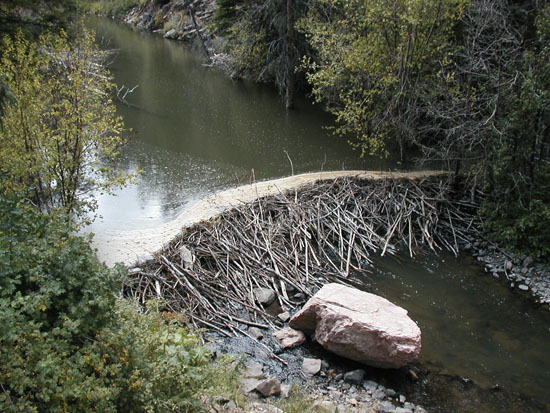 If we use the natural world as a guide for how to build our homes, we could look to other animals and see how they do it. Whatever they use to build with will be found locally; they don’t waste energy carrying things great distances. Beaver cut saplings along the creek bed to dam the stream and create a fortified home. Birds collect twigs and grass to make their nests. Some wasps gather mud to form protected space for their young. Many animals don’t carry materials at all; they simply convert an existing hole or niche as a suitable home, much as our ancestors used caves or rock overhangs for shelter.
Messages from Mesa Verde
I visited Mesa Verde in Colorado near the Four Corners. This was my first encounter with the “ruins” of the ancestral Puebloan people, progenitors of the Pueblo and Hopi nations. I had heard about Mesa Verde since I was a kid, but nothing could prepare me for the awesome reality. Despite the influx of tourists, there is a peaceful and spiritual quality that persists.
The most famous aspect of what was left behind there are the cliff dwellings, which are certainly magnificent. These finely crafted rock structures emerge from huge alcoves within the cliff faces, and from a distance resemble swallows’ nests, fitting into the surrounding rock just as naturally. Actually the cliff houses represent the culmination of about seven centuries of habitation at Mesa Verde. Then around 1300 AD the people abruptly abandoned their homes and moved south and southeast to establish other communities. There is much speculation about why they moved, but the most likely cause was a prolonged period of at least 12 years of drought.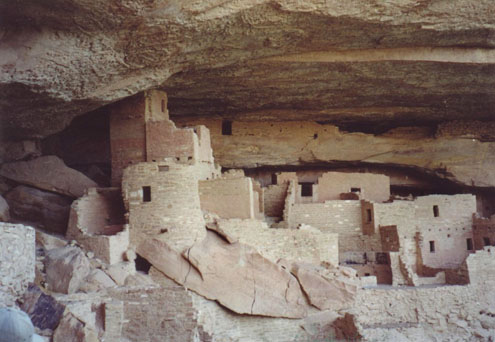
Woman Builds Breathtaking Earthbag Dome Home
Bonita Domes were built in Joshua Tree, California nearly a decade ago. Based on designs by Nader Khalili, these domes were fully permitted at that time. You can find out more about how they were built at earthbagbuilding.com.