300 earthbag homes for ‘Yolanda’ survivors to rise in Coron, Palawan

From yesterday’s www.businessmirror.com written by Jonathan L. Mayuga:
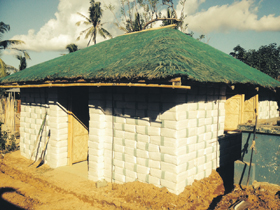
This type of environment-friendly earthbag homes will soon rise in Barangay Lajala, Coron, Palawan for the survivors of supertyphoon Yolanda. (Jonathan L. Mayuga)
This type of environment-friendly earthbag home will soon rise in Barangay Lajala, Coron, Palawan for the survivors of supertyphoon Yolanda. (Jonathan L. Mayuga)

CORON, Palawan—Eco-friendly earthbag homes for Supertyphoon Yolanda survivors will soon rise in Barangay Lajala, one of the coastal barangays devastated by the super typhoon in this island municipality last year.

Mayor Carla “Fems” Reyes said the island municipality is planning to construct 300 earthbag homes for those who remain homeless after Yolanda triggered a storm surge that swept away thousands of houses along coastal towns in Central Philippines.

The earthbag homes, with a floor area of 24 square meter, will have one bedroom, one comfort room and a concrete floor, according to a plan approved by the local government of Coron.

Instead of ordinary hollow blocks, a mixture of cement and soil—one part cement and seven parts soil—was used to make bricks that would be used for the walls of the house. For the roofs, doors and windows, bamboo poles or kawayan and nipa will be used.
Read more

Earthbag Building in Kenya

We are always pleased to hear from people around the world about their building projects. I recently received this email, along with several photos:

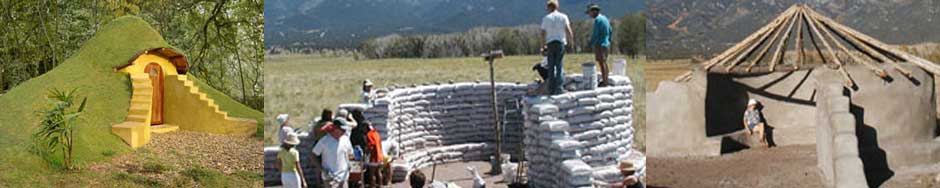
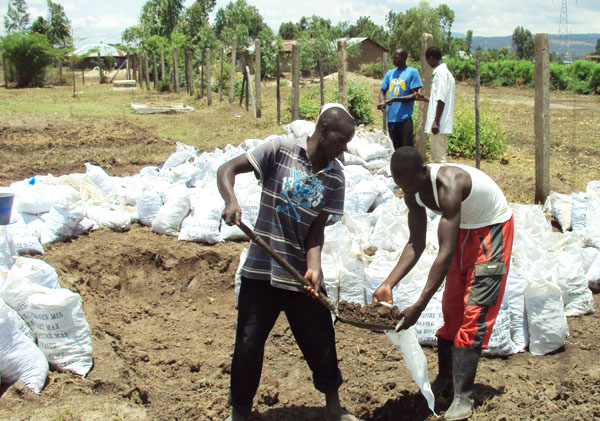
“Dear Kelly I have seen your inspiring works with earthbags and am happy to inform you that I am also into green building here in Kenya. I have done a demo house using earthbags and will be going for the next level of building as an eco-friendly training school using this method. We would want to include off grid power eventually, but that is for the future.  Regards, Barry Kungu”

Filling the earthbags

Read more

Muni Seva Ashram – the Green Ashram

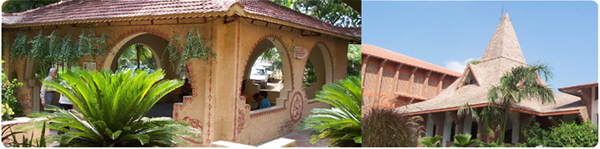
Muni Seva Ashram in Gujarat, India has an impressive number of green features.

“Muni Seva Ashram is an active agent in the drive for sustainable development, with large-scale interests in organic farming, agro forestry, horticulture, animal husbandry, solar energy, and biogas. This is also reflected in the Ashram’s new website address, Green Ashram.org

Read more

Grassroot Movement in Nepal (GMIN): Earthbag School

The final finished structure of the two room earthbag school in Nepal. [The earthbag walls were] done in ten days by three paid labourers and 5-7 volunteers from the village.

GMIN has built about 21 schools so far in Nepal out of various materials such as adobe, stone and earthbags. Successful fundraising will enable them to build another 20.

“School #18, Ciuridara, Dang, Nepal
Our volunteer Bidya Bajracharya had surveyed this village last year but could not support them with the required two rooms as they did not have rocks nearby and their mud quality was not good enough to make mudbricks. But after meeting Peter Jensen, also a Denmark GMIN ambassador has come up with the solution of building with earthbags. With this earthbag style we can build even in the most remote areas where there are no rocks and poor quality mud.

Read more

Sean’s Adobe House

sean1

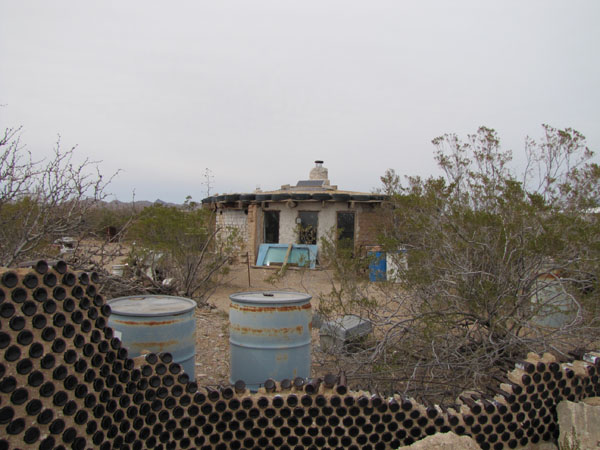
Within the same alternative community as Ted’s ruins (see the previous post) is Sean’s Adobe House, also featured in my Sampler of Alternative Homes video. Sean Sands built this house about 20 years ago for less than $1,000. He used the native soil, which is an almost perfect adobe mix of about 25% clay and 75% sand. All he would do is moist the soil where he wanted to harvest adobe the night before he planned to dig it. Then he placed the damp soil in a hydraulic ram press to make compressed earth blocks. He would let these cure in the sun for a few days before building with them. Part of the walls of the house were made with old tires packed with soil.

Read more