Rebuilding Nepal, One Earthbag at a Time

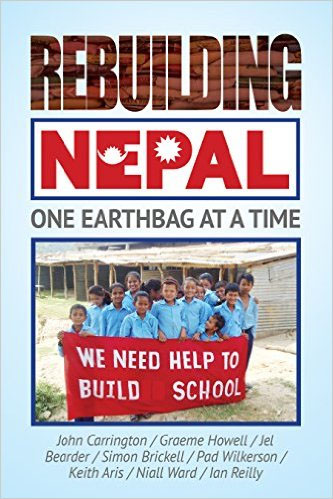
rebuildingnepalRebuilding Nepal, One Earthbag at a Time is a short Kindle book assembled by a team of eight volunteers who went to Palchok in the Trishuli Valley to rebuild a school in the fall of 2015. Because of the remote location they needed to plan for every aspect of the project, and this book is primarily advice for others who might try to do something similar. Besides actually building the school, they wanted to introduce the earthbag technique to the villagers so they could continue rebuilding this way. The team had raised enough funds from friends and family to accomplish this goal. They were there for only two weeks, but they got that small school built! Graeme Howell was the mastermind behind this endeavor.

The first chapter introduces what they consider to be the essential building process and suggests how to make this happen efficiently. Because of the number of volunteers, including folks from the village, they wanted to keep everybody busy and make sure there weren’t bottlenecks in the process. For this reason they had people filling and sewing bags right away, even before the foundation trench was prepared. Likewise, they had people screening soil for the eventual plaster.
Read more

An Earthbag Meditation Dome in Taiwan

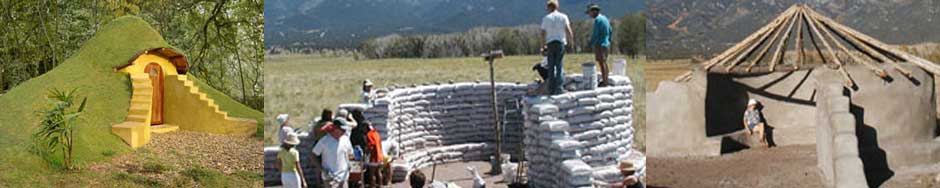
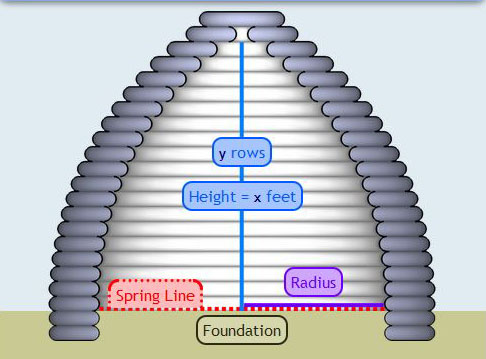
I recently got an email from Sunny Tsai, a Chinese professor of architecture (now retired) with an update on a lovely meditation dome he and some 1400 Buddhist volunteers have just completed in Taiwan. He says that “To reach my idea of carbon reduction and sustainability, I avoided using all kinds of industrial materials and … Read more

300 earthbag homes for ‘Yolanda’ survivors to rise in Coron, Palawan

From yesterday’s www.businessmirror.com written by Jonathan L. Mayuga:

This type of environment-friendly earthbag homes will soon rise in Barangay Lajala, Coron, Palawan for the survivors of supertyphoon Yolanda. (Jonathan L. Mayuga)
This type of environment-friendly earthbag home will soon rise in Barangay Lajala, Coron, Palawan for the survivors of supertyphoon Yolanda. (Jonathan L. Mayuga)

CORON, Palawan—Eco-friendly earthbag homes for Supertyphoon Yolanda survivors will soon rise in Barangay Lajala, one of the coastal barangays devastated by the super typhoon in this island municipality last year.

Mayor Carla “Fems” Reyes said the island municipality is planning to construct 300 earthbag homes for those who remain homeless after Yolanda triggered a storm surge that swept away thousands of houses along coastal towns in Central Philippines.

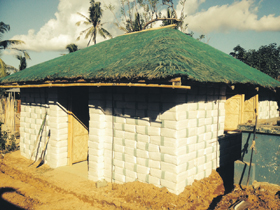
The earthbag homes, with a floor area of 24 square meter, will have one bedroom, one comfort room and a concrete floor, according to a plan approved by the local government of Coron.

Instead of ordinary hollow blocks, a mixture of cement and soil—one part cement and seven parts soil—was used to make bricks that would be used for the walls of the house. For the roofs, doors and windows, bamboo poles or kawayan and nipa will be used.

Read more

Earthbag Building in Kenya

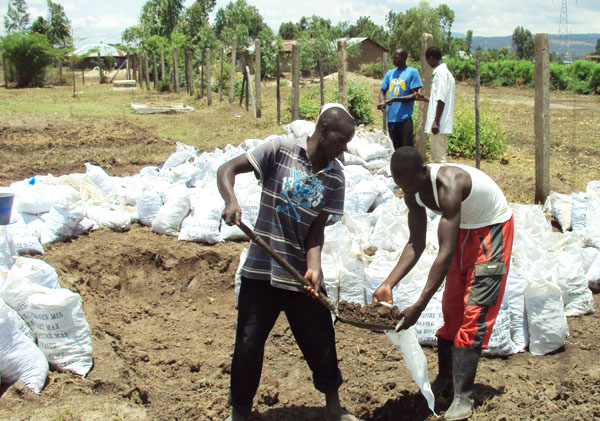
We are always pleased to hear from people around the world about their building projects. I recently received this email, along with several photos:

“Dear Kelly I have seen your inspiring works with earthbags and am happy to inform you that I am also into green building here in Kenya. I have done a demo house using earthbags and will be going for the next level of building as an eco-friendly training school using this method. We would want to include off grid power eventually, but that is for the future.  Regards, Barry Kungu”

Filling the earthbags

Read more

The Pantry/Root Cellar

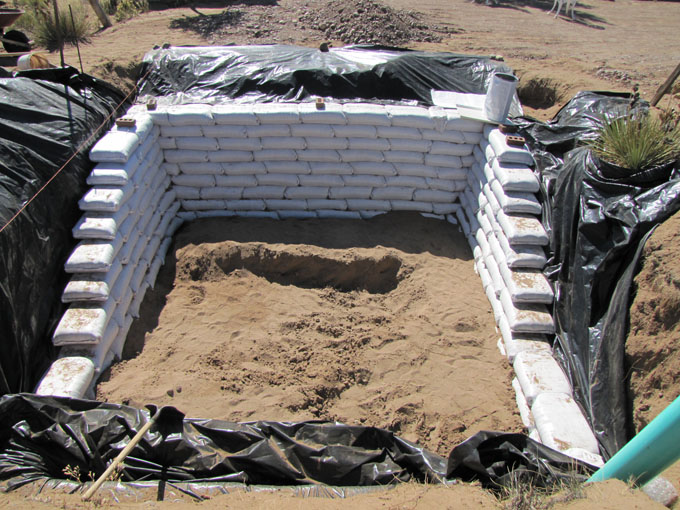
The pantry/root cellar under construction.

After finishing the chicken coop described in yesterday’s post it was time to start work on the pantry/root cellar portion of the complex. I hired an excavator to dig out part of the hole and give me a head start on the project. While he was here with the machinery he also leveled an area for the rest of the building, dug an extension of the water line so we would have water next to the chicken coop, and brought in road base for inside the barn.

Read more