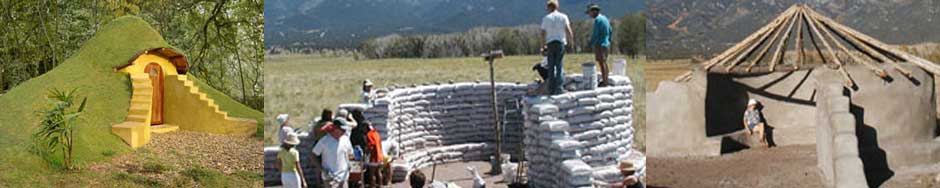
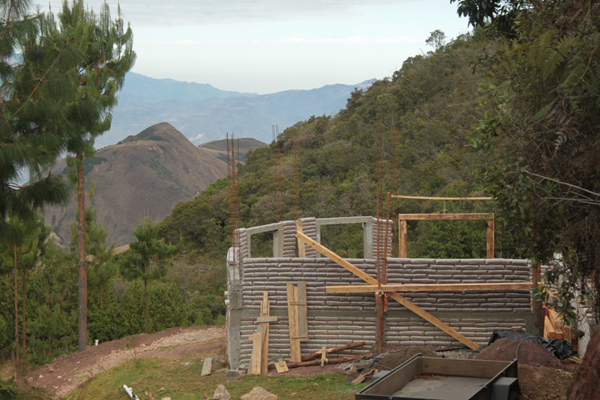
Confined masonry is one of the most common building systems in the world, with millions of structures built this way. The first confined earthbag house is now under construction in Ecuador.
Structural aspects
Turning Round Straw Bales into Rectangular Building Bales
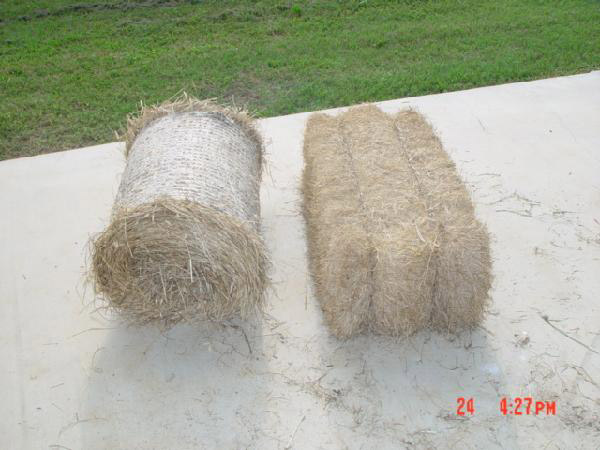
Cliff, one of our long time readers, sent me the photo above and the following email.
“Just a heads up on something I see coming in the future in the straw bale world. Small round bales. Lots of reasons. There are a lot of lifestyle or small farmers who can’t afford or need the big expensive bales. These smaller balers are much cheaper to buy and operate. The bales are much more weather resistant than square bales. Here in NZ they can fit down a row of vines in a vineyard. Any other baler can’t go there. I think we may see some innovation in the straw bale building world. You use what is available and as these become more available people will adapt to using them.”
Ark Soaring in the Sky

Kikuma Watanabe is an associate professor at Kochi University of Technology in Japan and is responsible for the overall design of this project. The owner is Kagayaku Inochi (glorious life), a Japanese NPO. This school for orphans is in Sangkhlaburi village, Thailand, located near the borderline between Thailand and Myanmar. In this area there are a lot of poor people who immigrated from Myanmar. This school aims to provide sustainable poverty alleviation in the area.
To provide a good future for the children, they hoped that the school would be designed to realize their dreams. So, at first the teacher asked the children to draw the dream of the school building. One of them drew a flying ship as his dream. They adapted his idea, and tried to translate the drawing into architecture.
Do-it-yourself Pole-barn Building
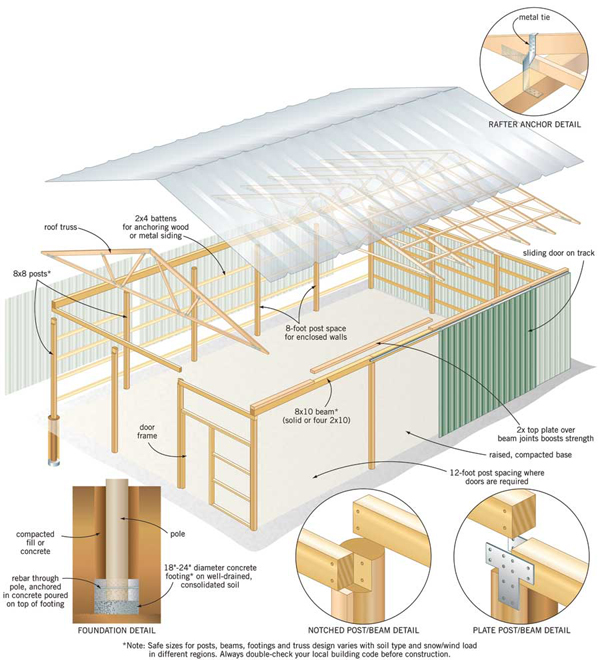
Put up a pole building for a fast, solid and cost-effective workshop, storage space or livestock shelter.
Evolution of the Pantry Concept
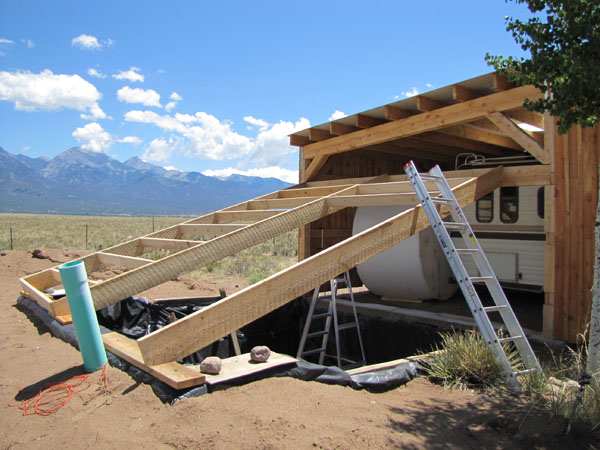
This is what the pantry looks like today. I have finished all of the bag work and am now building the framework for the roof. The large turquoise pipe in the foreground is the inlet air vent that goes all the way down to the bottom of the hole with an elbow through the bag wall. In the distance, next to the motor home, is a 1500 gallon water tank that I got a great deal on. That tank will be dropped into the pantry hole for storage of rain water off the roof of the garage. The vertical walls that will meet the roof of the pantry will be cordwood construction, providing good insulation to keep the panty temperate; the roof will be well insulated as well.
Progress on the Barn / Garage
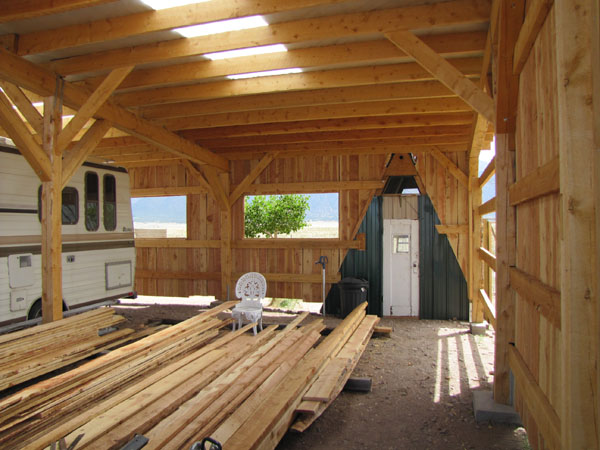
In the above photo you can see how the chicken coop (the A-frame shape) has been integrated into the barn design. The idea behind this whole grouping of functions was that you would be able to walk under roof directly from the house through the mudroom, into the garage and then either into the chicken coop or the recessed pantry.
You can tell that the skylight over each bay provides lots of open light. The space under the barn siding will be sealed up with mortared stones, so no wood will touch the soil anywhere. There will be a sink just to the left of the chicken coop that the hydrant will spill into.