Sunray Kelley’s Tree House

tree1

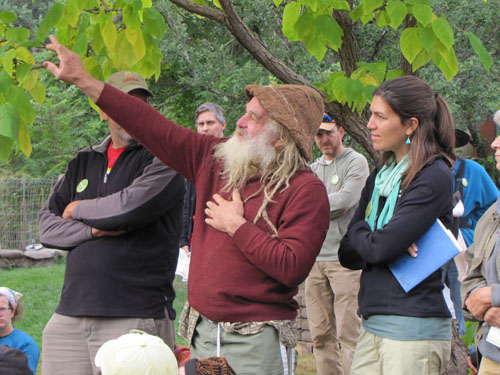
During one of the early morning circles Sunray Kelley pointed up the hill to a group of trees and explained that he would be building a tree house there and that people were welcome to join him in the project. It didn’t take him long to attract a group of helpers willing to go around scrounging structural elements for this.

Sunray is a well known character around previous colloquia and a famous artist/builder in his own right. He grew up in the woods of Washington State and still resides on the family property, where he gleans material for most of the building that he has done there. I have never seen him wear shoes.
Read more

Door Buttress for Earthbag Dome

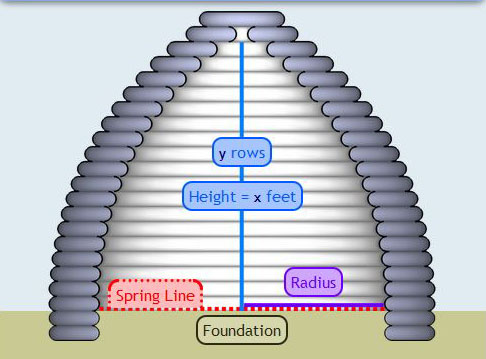
I got the following question from a reader regarding earthbag domes: “Once the appropriate width of the bag has been determined, can you go with the next size up to make buttress walls around doors unnecessary? I have noticed that in some cases, like the example attached, no buttress walls have been used. And eliminating … Read more

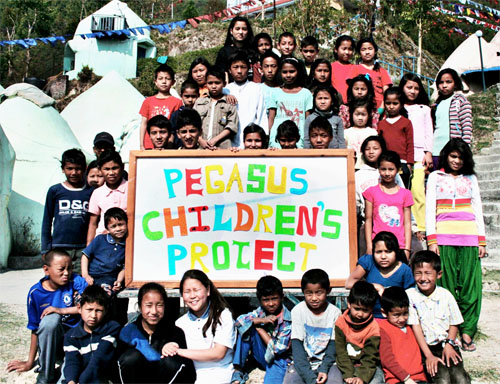
Pegasus Domes Withstand Nepal Earthquake

CalEarth, the Superadobe folks who helped build the earthbag domes that comprise the Pegasus Children’s Project near Kathmandu, Nepal have sent out this press release:

Superadobe/Earthbag Orphanage Withstands Nepal Earthquake
Cal-Earth Low-cost Sustainable Earthen Housing Solutions Proved Effective and Safe in Earthquakes

After the 7.6 magnitude earthquake in the Kathmandu valley in Nepal, Cal-Earth Institute stunned by how their patented Superadobe/Earthbag technology fared in contrast to the neighboring homes. The 90 children and caretakers at Pegasus Children's Project Orphanage are safely sheltered by these domes, made of just sandbags and barbed wire.
After the 7.6 magnitude earthquake in the Kathmandu valley in Nepal, Cal-Earth Institute stunned by how their Superadobe/Earthbag technology fared in contrast to the neighboring homes. The 90 children and caretakers at Pegasus Children’s Project Orphanage are safely sheltered by these domes, made of just sandbags and barbed wire.

Read more

News Report about Earthbag School Surviving Quake

We have already reported about the amazing survival of many earthbag structures in Nepal after their big quake. This fact is now being picked up by some major news outlets. For instance media conglomerate 3News in New Zealand has produced news accounts both on television and online:

“They say earthquakes don’t kill people, but buildings do – no more so than in Nepal where entire villages have been flattened. But in the rural village of Sangachok, there is one building that is still standing, all thanks to the handiwork of a team half a world away.

In Sangachok, there is destruction as far as the eye can see, but among the rubble and crumbled buildings there is some good news, and what could be a lesson for Nepal in earthquake resilience. Nelson-based First Steps Himalaya raised money to build the training centre for teachers to improve education in rural Nepal. The building remains standing even after the earthquake.

Volunteers from New Zealand and Nepal used rice bags filled with soil, which are laid out like bricks, covered with chicken wire and then plastered over. The Auckland company that helped construct it hopes it can deliver much more than that.

Read more

Sean’s Adobe House

sean1

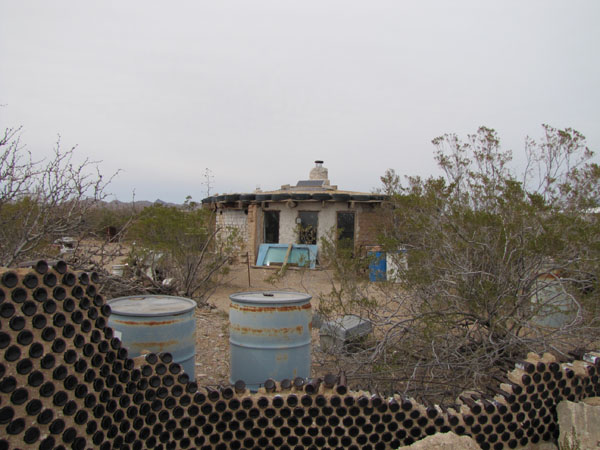
Within the same alternative community as Ted’s ruins (see the previous post) is Sean’s Adobe House, also featured in my Sampler of Alternative Homes video. Sean Sands built this house about 20 years ago for less than $1,000. He used the native soil, which is an almost perfect adobe mix of about 25% clay and 75% sand. All he would do is moist the soil where he wanted to harvest adobe the night before he planned to dig it. Then he placed the damp soil in a hydraulic ram press to make compressed earth blocks. He would let these cure in the sun for a few days before building with them. Part of the walls of the house were made with old tires packed with soil.

Read more