Pegasus Domes Withstand Nepal Earthquake

CalEarth, the Superadobe folks who helped build the earthbag domes that comprise the Pegasus Children’s Project near Kathmandu, Nepal have sent out this press release:

Superadobe/Earthbag Orphanage Withstands Nepal Earthquake
Cal-Earth Low-cost Sustainable Earthen Housing Solutions Proved Effective and Safe in Earthquakes

After the 7.6 magnitude earthquake in the Kathmandu valley in Nepal, Cal-Earth Institute stunned by how their patented Superadobe/Earthbag technology fared in contrast to the neighboring homes. The 90 children and caretakers at Pegasus Children's Project Orphanage are safely sheltered by these domes, made of just sandbags and barbed wire.
After the 7.6 magnitude earthquake in the Kathmandu valley in Nepal, Cal-Earth Institute stunned by how their Superadobe/Earthbag technology fared in contrast to the neighboring homes. The 90 children and caretakers at Pegasus Children’s Project Orphanage are safely sheltered by these domes, made of just sandbags and barbed wire.

Read more

News Report about Earthbag School Surviving Quake

We have already reported about the amazing survival of many earthbag structures in Nepal after their big quake. This fact is now being picked up by some major news outlets. For instance media conglomerate 3News in New Zealand has produced news accounts both on television and online:

“They say earthquakes don’t kill people, but buildings do – no more so than in Nepal where entire villages have been flattened. But in the rural village of Sangachok, there is one building that is still standing, all thanks to the handiwork of a team half a world away.

In Sangachok, there is destruction as far as the eye can see, but among the rubble and crumbled buildings there is some good news, and what could be a lesson for Nepal in earthquake resilience. Nelson-based First Steps Himalaya raised money to build the training centre for teachers to improve education in rural Nepal. The building remains standing even after the earthquake.

Volunteers from New Zealand and Nepal used rice bags filled with soil, which are laid out like bricks, covered with chicken wire and then plastered over. The Auckland company that helped construct it hopes it can deliver much more than that.

Read more
A Small Underground Dome Experiment

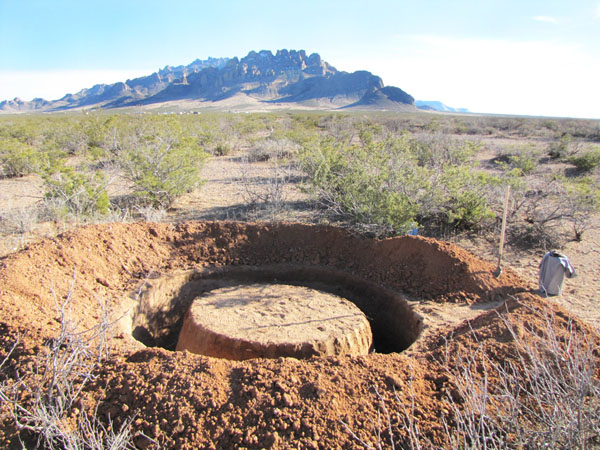
I own a few acres of desert property in Southern New Mexico and have often wondered what the underground temperature would be about 6 feet below the surface in this region. Summers can be quite hot and winters are fairly mild, so digging into the ground might be a good way to develop a residence that would be pleasant all year round, with very little additional energy input. To test this theory out, I thought that somehow burying a recording thermometer deep under ground would provide useful information.

underground3
Many people have asked about burying earthbag domes, and unfortunately I know of few actual examples of doing this. So I thought that a fun and informative experiment would be to build a small earthbag dome underground on our property, place the recording thermometer inside, and completely close it up for a year.

Read more

Malawi Vernacular Architecture

Malawi vernacular architecture

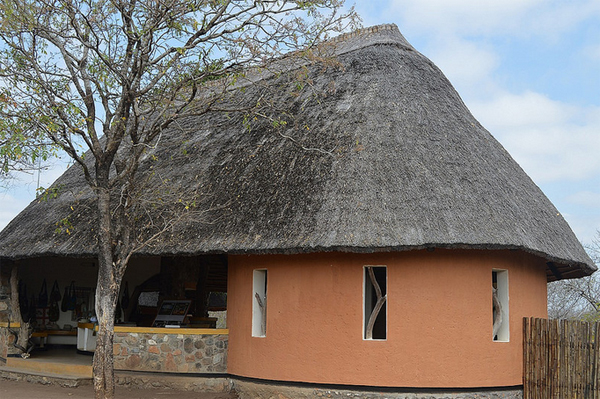
“Hello.. my name is Jon (Twingi) Sojkowski, I am a registered architect and I have a passion for African vernacular architecture. I recently (Sept. 2014) traveled to Malawi to document the vernacular architecture in the country. For 3 weeks, me and my Malawian team traveled the entire country, stopping at 300+ villages and homesteads to interview people on their traditional structures and to take pictures and video. The end result is the web site: Malawi Architecture.com

Read more

Further Information about Instant Shelters

Owen suggested that I elaborate on my suggestion for the use of magnesium cement in conjunction with basalt woven mats to create nearly instantaneous shelter. This idea stems from the work done by Michael Collins using magnesium cement (sometimes called “Ceramicrete”) in combination with other fibers, such as burlap or canvas. You can read a … Read more

Dogtrot House

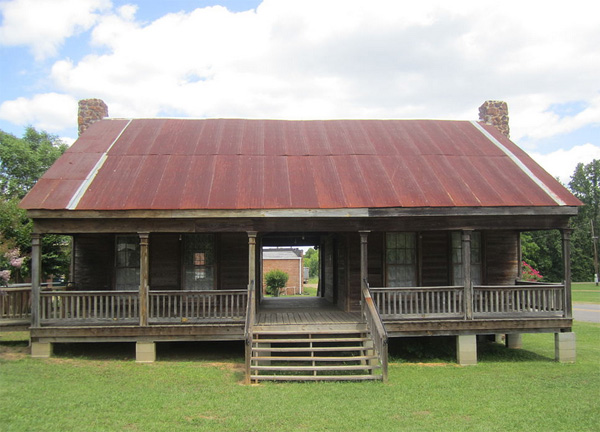
Dogtrot is a style of house that was common throughout the Southeastern United States during the 19th and early 20th centuries.

“The dogtrot, also known as a breezeway house, dog-run, or possum-trot, is a style of house that was common throughout the Southeastern United States during the 19th and early 20th centuries. Some theories place its origins in the southern Appalachian Mountains. Some scholars believe the style developed in the post-Revolution frontiers of Kentucky and Tennessee. Others note its presence as far east as the Piedmont of the Carolinas from an early period. Architects continue to build dogtrot houses using modern materials but maintaining the original design.

Read more