“San Francisco’s YIMBY movement (“yes in my backyard”) is pushing the city to build its way out of the housing crisis.
Community
Kirk Nielsen – Green Builder
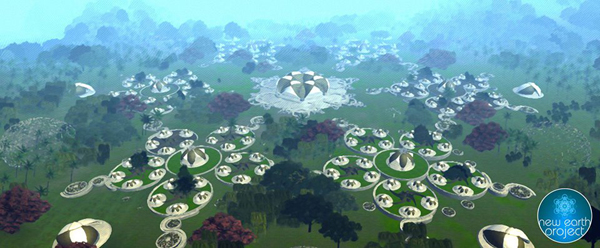
“Community Layout and Structures Designed Using Sacred Geometry
Using sacred geometry to layout the communities enhances the connection to Earth, Spirit, and creates a joyous uplifting environment.
Tiny House Jamboree
“Calling all tiny house and small living enthusiasts! You’re invited to the 2016 National Tiny House Jamboree™ at The Western Museum of Mining and Industry; 225 North Gate Blvd. Colorado Springs, CO., August 5-7, 2016 .
Rebuilding Nepal, One Earthbag at a Time
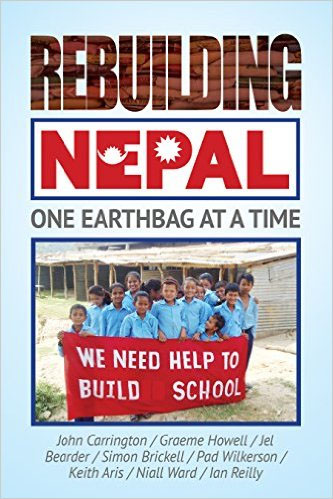 Rebuilding Nepal, One Earthbag at a Time is a short Kindle book assembled by a team of eight volunteers who went to Palchok in the Trishuli Valley to rebuild a school in the fall of 2015. Because of the remote location they needed to plan for every aspect of the project, and this book is primarily advice for others who might try to do something similar. Besides actually building the school, they wanted to introduce the earthbag technique to the villagers so they could continue rebuilding this way. The team had raised enough funds from friends and family to accomplish this goal. They were there for only two weeks, but they got that small school built! Graeme Howell was the mastermind behind this endeavor.
The first chapter introduces what they consider to be the essential building process and suggests how to make this happen efficiently. Because of the number of volunteers, including folks from the village, they wanted to keep everybody busy and make sure there weren’t bottlenecks in the process. For this reason they had people filling and sewing bags right away, even before the foundation trench was prepared. Likewise, they had people screening soil for the eventual plaster.
Report from Nepal
I just received this news from Owen Geiger, who has been in Nepal for several days, reviewing earthbag projects around the country. “Things are WAY more hectic than I even imagined. Traveling to projects in the remote mountains is just grueling. The roads in Nepal are among the worst in the world. It takes hours … Read more
Eco-Homes: People, Place and Politics
Jenny Pickerill is a professor of environmental geography at the University of Sheffield, and I met her when she was conducting research for this book, gallivanting around the world on a Winston Churchill Memorial Trust Travel Fellowship. She interviewed me and we toured a variety of novel eco-homes near Crestone, Colorado, where I was living at the time. In addition to Crestone, she visited ecological enclaves in Britain, Spain, Thailand, Argentina and other locations in the United States.
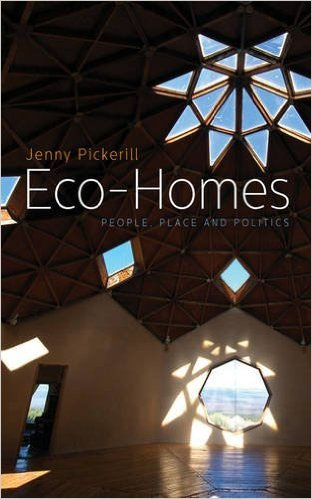
Her purpose in assembling this academic study into ecological living was to focus more on the social, geographical and political issues around eco-housing, which are often ignored, in the hopes that a broader acceptance of sustainable architecture will evolve. I found her analysis enlightening and well worth the read, if a bit academic in its outlook. Each chapter of the book is devoted to a different filter, which in total provides a good understanding of the issues involved.
The first chapter focuses on the eco aspects of eco-homes, and why this is important. She observes that “eco-houses are being built to deal with the issues of waste through structural innovations by altering size, harnessing renewable technologies, retrofitting existing housing stock and changing occupants’ behavior and practices. Each approach has benefits, limitations and financial costs.” She goes on to chastise government and industry for emphasizing the technical fixes while ignoring simpler solutions.
Next, Jenny delves into the home aspect explaining how hard it is to define what home really is. Home can generally refer to country, state, city, bioregion, neighborhood, as well as a specific house. We have an emotional attachment to our homes that must be recognized in order to make eco-houses appealing to a wider audience. The emotional component is affected by aesthetics, location, style, privacy, comfort, and worth.