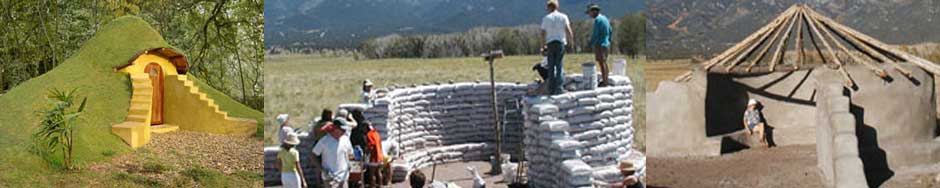
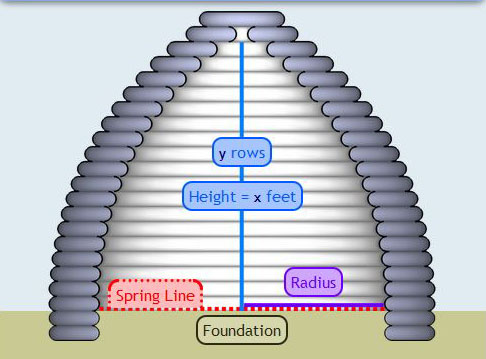
There is a fun and free online tool for calculating the materials needed for building earthbag domes. I think that it errors on the conservative side, but this is probably a good thing. If you go to www.terra-form.org you can interact with the calculator.
Structural aspects
Pegasus Domes Withstand Nepal Earthquake
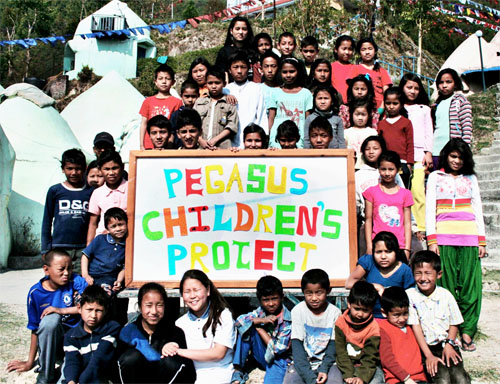
CalEarth, the Superadobe folks who helped build the earthbag domes that comprise the Pegasus Children’s Project near Kathmandu, Nepal have sent out this press release:
Superadobe/Earthbag Orphanage Withstands Nepal Earthquake
Cal-Earth Low-cost Sustainable Earthen Housing Solutions Proved Effective and Safe in Earthquakes

News Report about Earthbag School Surviving Quake
We have already reported about the amazing survival of many earthbag structures in Nepal after their big quake. This fact is now being picked up by some major news outlets. For instance media conglomerate 3News in New Zealand has produced news accounts both on television and online:
“They say earthquakes don’t kill people, but buildings do – no more so than in Nepal where entire villages have been flattened. But in the rural village of Sangachok, there is one building that is still standing, all thanks to the handiwork of a team half a world away.
In Sangachok, there is destruction as far as the eye can see, but among the rubble and crumbled buildings there is some good news, and what could be a lesson for Nepal in earthquake resilience. Nelson-based First Steps Himalaya raised money to build the training centre for teachers to improve education in rural Nepal. The building remains standing even after the earthquake.
Volunteers from New Zealand and Nepal used rice bags filled with soil, which are laid out like bricks, covered with chicken wire and then plastered over. The Auckland company that helped construct it hopes it can deliver much more than that.
Sean’s Adobe House
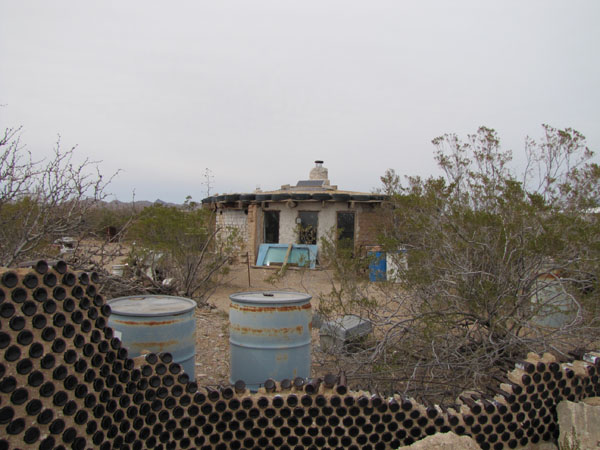
Within the same alternative community as Ted’s ruins (see the previous post) is Sean’s Adobe House, also featured in my Sampler of Alternative Homes video. Sean Sands built this house about 20 years ago for less than $1,000. He used the native soil, which is an almost perfect adobe mix of about 25% clay and 75% sand. All he would do is moist the soil where he wanted to harvest adobe the night before he planned to dig it. Then he placed the damp soil in a hydraulic ram press to make compressed earth blocks. He would let these cure in the sun for a few days before building with them. Part of the walls of the house were made with old tires packed with soil.
Confined Earthbag Construction

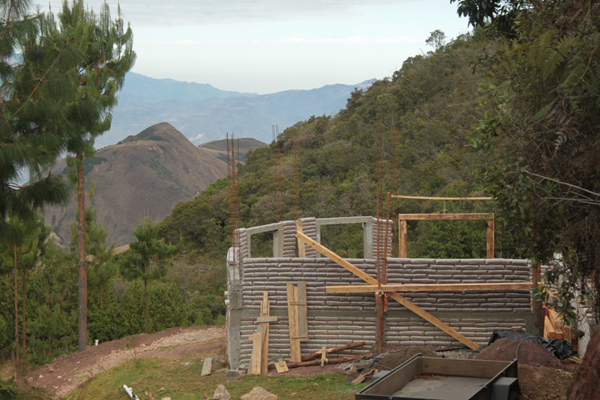
Confined masonry is one of the most common building systems in the world, with millions of structures built this way. The first confined earthbag house is now under construction in Ecuador.
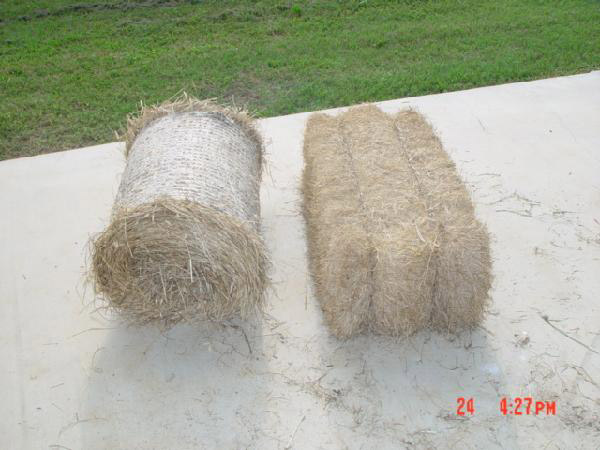
Turning Round Straw Bales into Rectangular Building Bales

Cliff, one of our long time readers, sent me the photo above and the following email.
“Just a heads up on something I see coming in the future in the straw bale world. Small round bales. Lots of reasons. There are a lot of lifestyle or small farmers who can’t afford or need the big expensive bales. These smaller balers are much cheaper to buy and operate. The bales are much more weather resistant than square bales. Here in NZ they can fit down a row of vines in a vineyard. Any other baler can’t go there. I think we may see some innovation in the straw bale building world. You use what is available and as these become more available people will adapt to using them.”