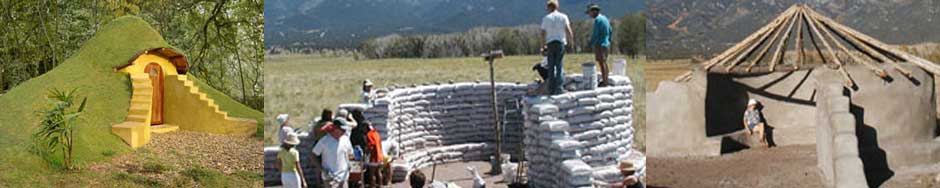
Bioceramic Dome Technology

Bioceramic dome technology opens a new world of possibility in architecture. The current construction industry uses four primary material families – wood, metal, concrete, and organic polymers (plastics). Chemically bonded ceramics (bioceramics) are a new class of geopolymers that enable a different kind of innovation in construction. The new material family bridges the gap between … Read more

Learn to Draw Your Home in 3D

Learn to Draw Your Home in 3D. Starting about Jan 6, this online course will be interwoven with short video snippets from previous live builds. Alosha Lynov, of BioVeda, will show the hows and whys of construction methodologies to get your home from paper to 3D software to physical reality. This will be a guided … Read more

The Cambridge Central Mosque

Marks Barfield Architects designed the Cambridge Central Mosque that is respectful of its surroundings while incorporating traditional Islamic design aspects, including geometric patterns that symbolize the infinite. The building, which replaces an old mosque that had become too small for the congregation, was designed around the idea of a “calm oasis of contemplation” situated within … Read more

Cob House Inside a Glass Dome in the Arctic

The Hjertefølgers, a Norwegian family of six, has installed a 25-feet-high geodesic glass dome over a cob house. The three story house is entirely built from sand, straw and clay, and without being protected this way it would be very thermally inefficient. The single pane glass dome was built by Solardome. The solar geodesic dome … Read more

Help Build a Unique Design in Brazil and Learn

I was just notified by Alosha of the Bio-Veda Institute of Arcology about this workshop in Brazil: We are inviting you to Brazil for a natural building workshop, starting on November 5th  2021. We will be building a Wautillarium, which is a self heating and cooling Earthship hybrid infused with Sacred Geometry and Biomimicry. You … Read more

Extraordinary Native American Engineering Feats

The Native Americans who occupied the area known as Poverty Point in northern Louisiana more than 3,000 years ago long were highly skilled engineers capable of building massive earthen structures that have withstood the test of time. It has been believed that they were simple hunters and gatherers, but new  archaeological findings paint a very … Read more